
The short version
- A belt is the lower-coverage choice for phone, keys, fuel and modest fluid.
- A vest carries more water and layers with better load distribution.
- The crossover point is the load that stays stable and reachable, not a fixed distance.
- Test either option fully loaded at running pace.
- For races, mandatory kit can decide before personal preference does.
Approaches in this guide
1The practical difference
A running belt concentrates a compact load around the waist. It offers low coverage and quick simplicity when you need a phone, keys, fuel or a small amount of water.
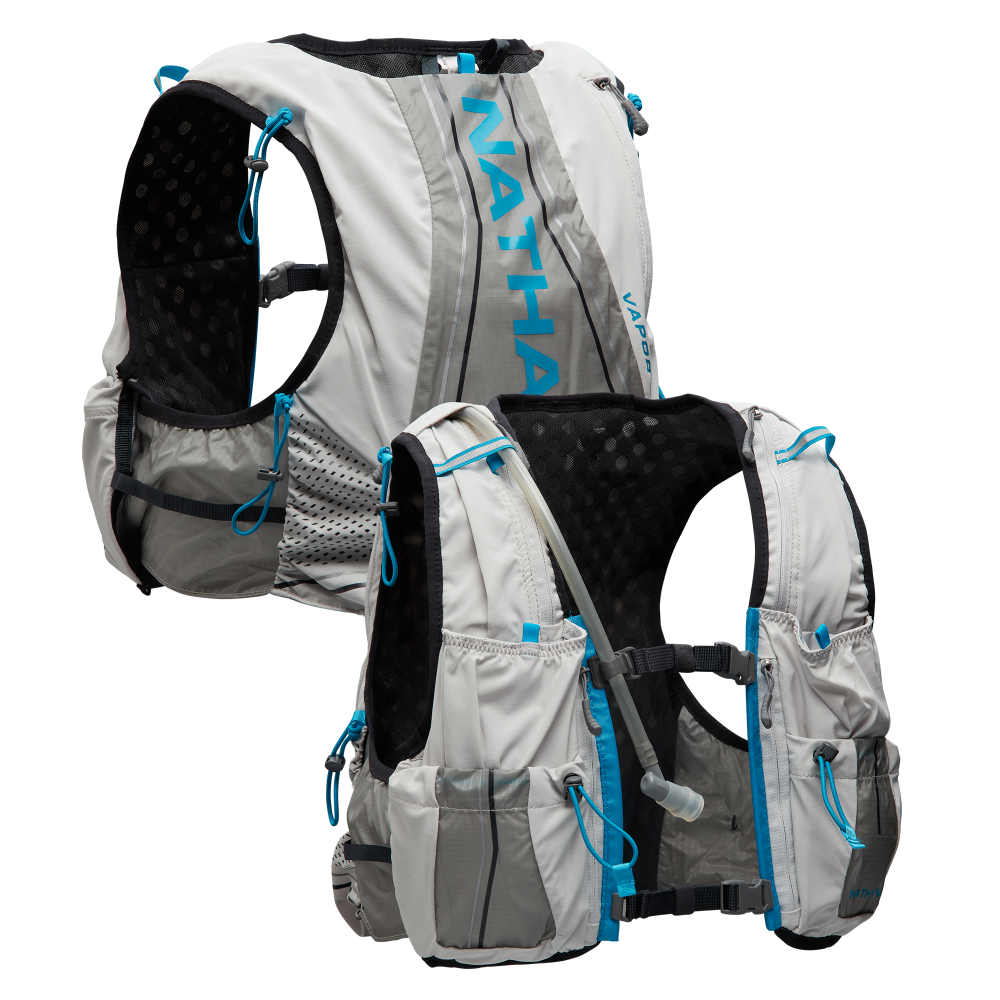
A hydration vest spreads a larger load across the chest, shoulders and back. Front pockets can hold flasks and food while rear storage carries layers and safety kit.
Neither is automatically better by distance. Weather, refill access, mandatory equipment and what your body tolerates determine when a belt stops being enough.
2Why the carry system changes the run
As load grows, a belt can bounce, rotate or press into the waist. A well-fitted vest distributes that weight but adds heat, fabric and adjustment.
Access matters alongside capacity. The best system lets you eat, drink and retrieve essentials without disrupting pace or unpacking everything.
3Five ways to decide
Total load
- What it is
- Water, phone, food, layers and safety equipment.
- How it changes the choice
- Longer unsupported time increases weight and bulk.
- What you may notice
- The point where compact waist carry loses stability.
Water volume
- What it is
- Fluid needed between reliable refills.
- How it changes the choice
- Heat and route access alter the requirement.
- What you may notice
- Whether bottles fit without dominating the carry.
Access
- What it is
- Ability to reach food, phone and layers.
- How it changes the choice
- Front vest pockets provide more zones; belts keep fewer items close.
- What you may notice
- How often you stop or remove gear.
Coverage and heat
- What it is
- Fabric against torso or waist.
- How it changes the choice
- Vests cover more area and may trap more warmth.
- What you may notice
- Different comfort in hot or humid weather.
Movement control
- What it is
- Fit, tension and load placement.
- How it changes the choice
- Uneven packing creates bounce in either system.
- What you may notice
- Rotation, sloshing, pressure or chafe.
4What to look for in each factor
Check capacity, bounce and access on a representative long run — pocket layout on a hangtag is not the same as access at race pace.
Look for
Total load
- Water, phone, food, layers and safety equipment.
- Watch for: The point where compact waist carry loses stability.
- Decision tip: Longer unsupported time increases weight and bulk.
Look for
Water volume
- Fluid needed between reliable refills.
- Watch for: Whether bottles fit without dominating the carry.
- Decision tip: Heat and route access alter the requirement.
Look for
Access
- Ability to reach food, phone and layers.
- Watch for: How often you stop or remove gear.
- Decision tip: Front vest pockets provide more zones; belts keep fewer items close.
Look for
Coverage and heat
- Fabric against torso or waist.
- Watch for: Different comfort in hot or humid weather.
- Decision tip: Vests cover more area and may trap more warmth.
5Vest and belt compared
| Hydration vest | Running belt | |
|---|---|---|
| Best load | Water, layers, food and kit | Phone, keys, fuel and compact fluid |
| Coverage | Higher torso coverage | Low coverage around waist |
| Access | Multiple front and rear pockets | Simple but limited storage |
| Adjustment | More fit points | Waist tension and placement |
| Typical limit | Heat and unnecessary bulk | Bounce or pressure as load grows |
Look for
Hydration vest
- Best load: Water, layers, food and kit
- Coverage: Higher torso coverage
- Access: Multiple front and rear pockets
- Adjustment: More fit points
Look for
Running belt
- Best load: Phone, keys, fuel and compact fluid
- Coverage: Low coverage around waist
- Access: Simple but limited storage
- Adjustment: Waist tension and placement
6More carry or less coverage
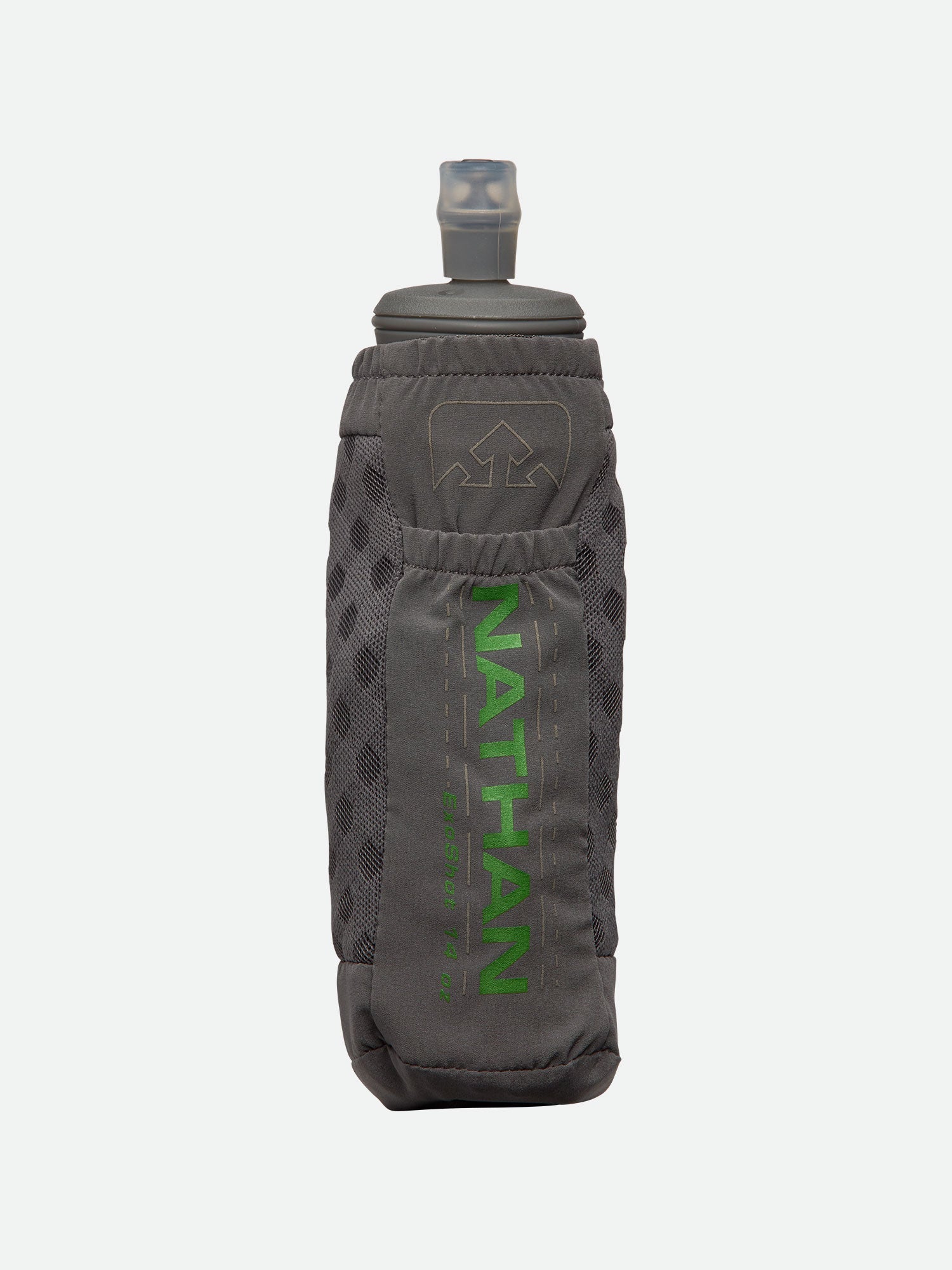
What you may gain
- · Vests distribute larger loads and offer more access
- · Belts are light, simple and cooler
- · Both keep hands free
What you may give up
- · Vests add fabric, heat and adjustment
- · Belts become unstable with bulky loads
- · Poor packing causes bounce in either system
7Three carry-system examples
Examples show capacity and access strategies rather than one winner for every run.
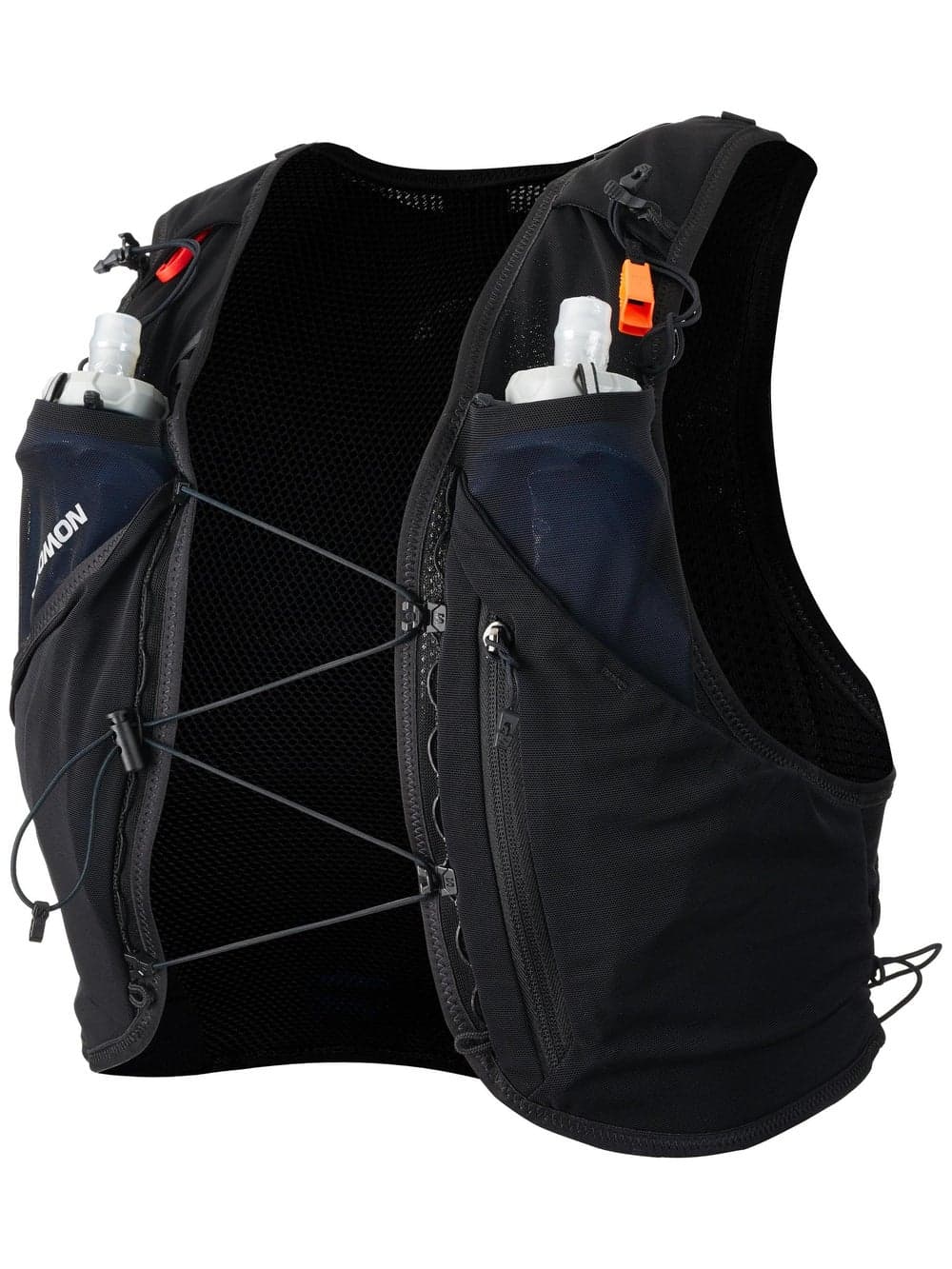
Full hydration vest
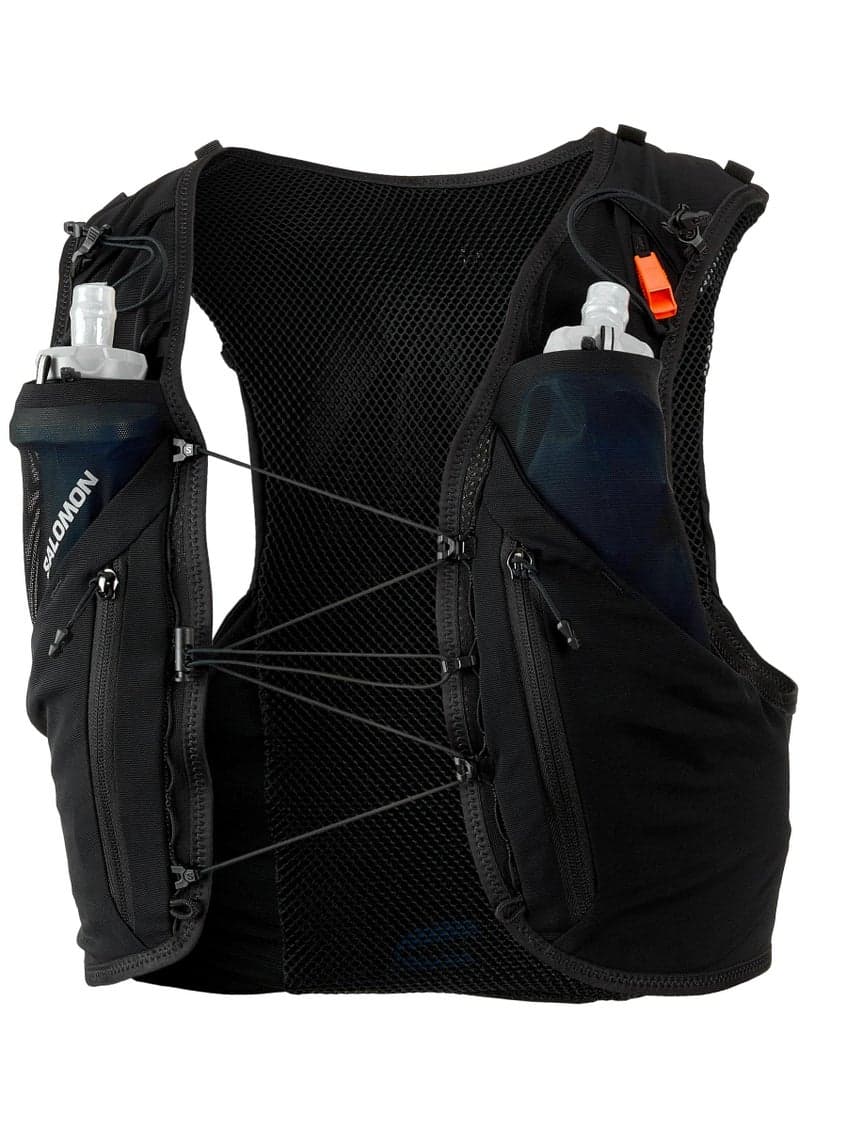
9.0 Kitletics Score
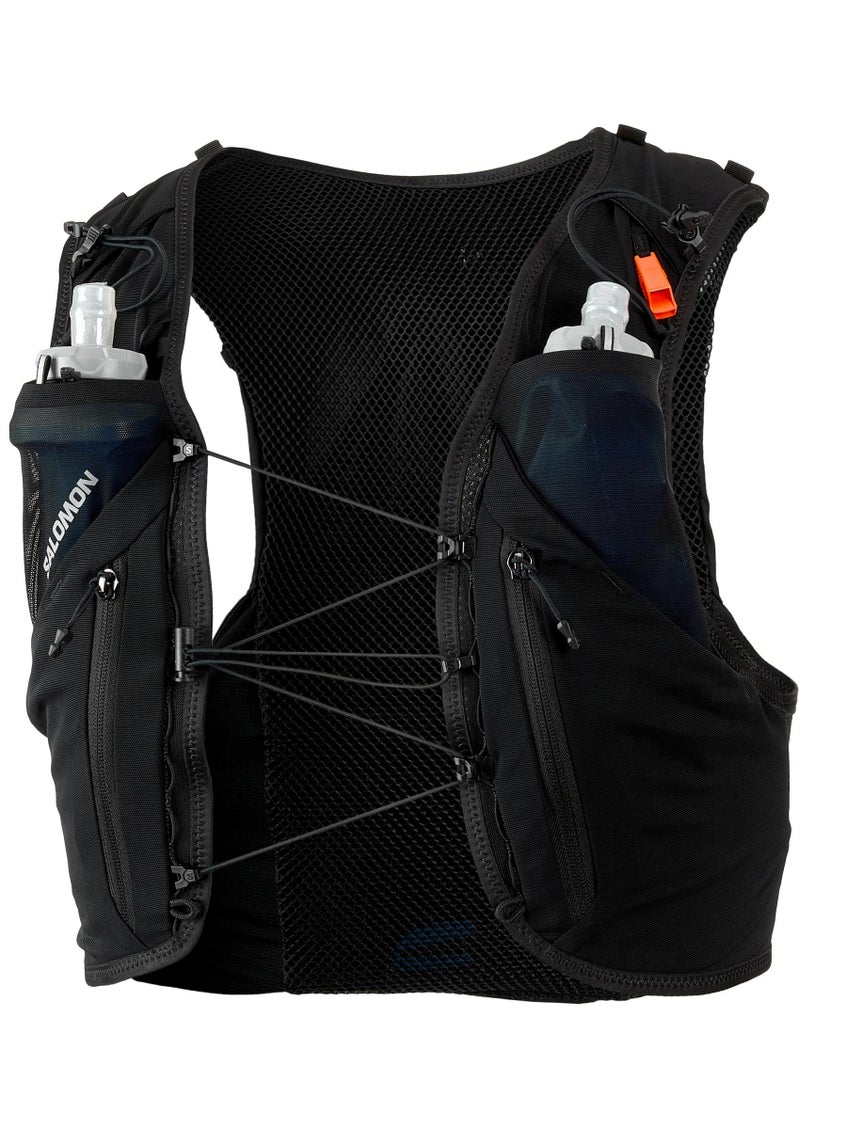
Salomon ADV Skin 12
Why it illustrates the category: Shows the capacity and distributed access suited to water, layers and race kit.
Best for
- · Long unsupported runs
- · Trail races
- · Large mandatory-kit loads
Trade-off
More coverage and capacity than routine short runs need.
Read review →From € 160Broad stretch belt
8.5 Kitletics Score
FlipBelt Classic
Why it illustrates the category: Demonstrates low-profile storage distributed around the waist.
Best for
- · Phone and keys
- · Road running
- · Minimalist carry
Trade-off
Limited structure and hydration capacity for heavier loads.
Read review →From € 32Compact expandable belt
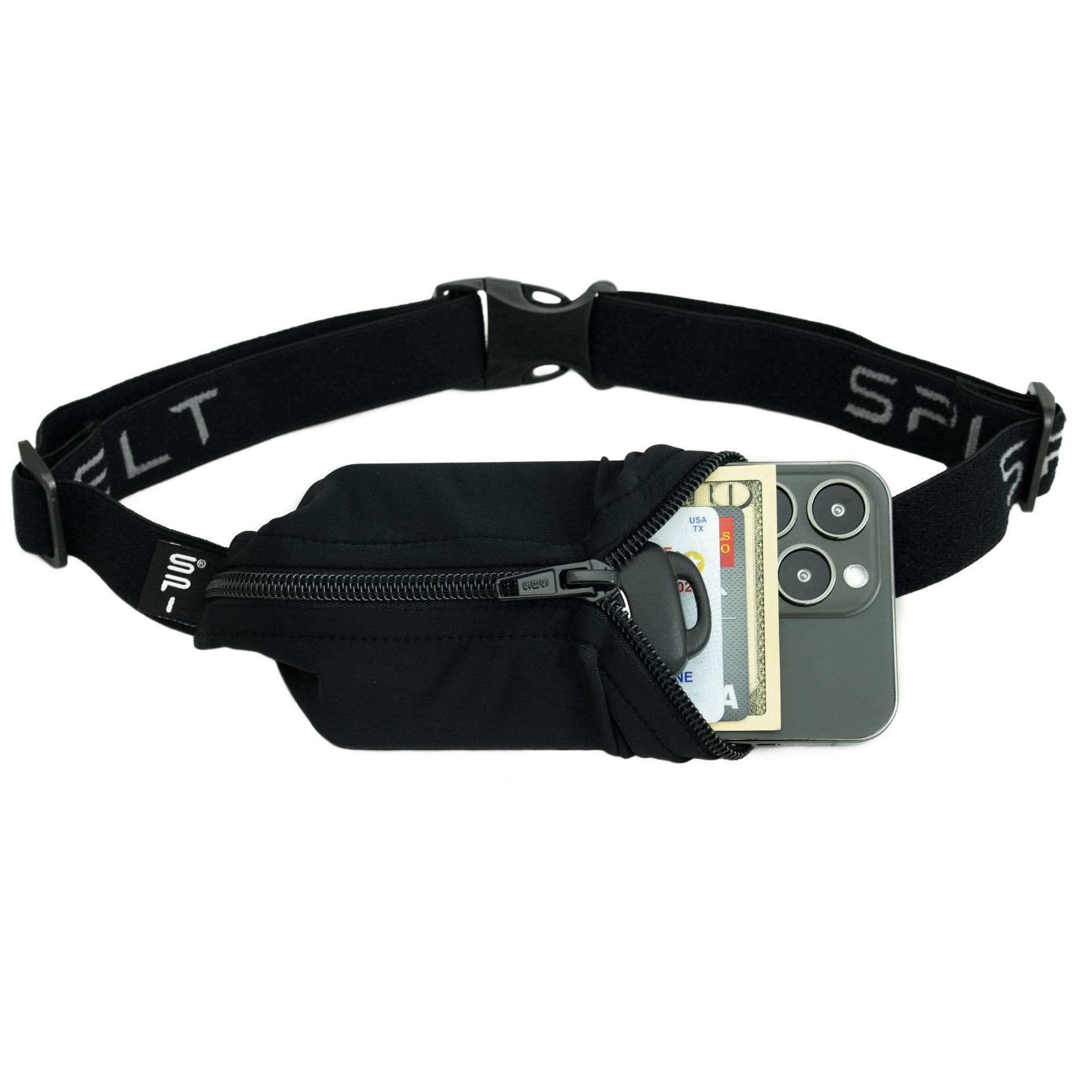
8.0 Kitletics Score
SPIbelt Original
Why it illustrates the category: Represents the smallest practical solution for a few essentials.
Best for
- · Short runs
- · Small phones and keys
- · Low-coverage carry
Trade-off
Concentrated storage can bounce when overfilled.
Read review →From € 28
8How current options differ
| Product | Support approach | Cushion | Drop | Widths | Best use | Key trade-off |
|---|---|---|---|---|---|---|
| — | — | — | — | Full hydration vest | Overkill for road 10K | |
| — | — | — | — | Broad stretch belt | Sweat can reach phone without a case | |
| — | — | — | — | Compact expandable belt | Single-pouch organization |
9Choose your carry system
- 1
Lay out the load
Include water, phone, food, layers and mandatory items.
- 2
Map refill gaps
Carry for the longest reliable gap, not total event distance.
- 3
Try the smallest system
Use a belt if the full load stays compact and stable.
- 4
Recognise the crossover
Move to a vest when water or layers cause bounce, pressure or poor access.
- 5
Test at pace
Load everything and run over representative terrain.
- 6
Practise access
Drink, eat and retrieve the phone without stopping.
10Common mistakes
Choosing by distance alone
Support, heat and mandatory kit change the carry requirement.
Testing empty
Water and a phone reveal movement and pressure.
Overfilling a belt
A compact belt stops working when the load becomes bulky.
Ignoring vest heat
Extra torso coverage can matter in warm conditions.
Packing without access
Frequently used items should be reachable while moving.
11Frequently asked questions
- When do I need a hydration vest instead of a belt?
- When water volume, layers or trail logistics exceed what a belt can carry comfortably — especially longer trail efforts and races with mandatory kit.
- When should I use a vest instead of a running belt?
- Move to a vest when water, layers or required kit make a belt bounce, press or become difficult to access.
- Is a running belt enough for a half marathon?
- It can be when course support covers water and you carry little gear. Distance alone does not decide; weather, support and mandatory kit do.
- Which is cooler in hot weather?
- A belt usually covers less skin and traps less heat. It is useful only if it can carry the required fluid and gear stably.
- Can a hydration vest replace a belt for every run?
- Yes, but it adds unnecessary coverage and adjustment for small loads. Use the smallest stable system that carries what the route requires.
Compare vest and belt carry
Salomon
ADV Skin 12
Full hydration vest
9.0 ExcellentFrom € 160
View review →FlipBelt
Classic
Broad stretch belt
8.5 Very GoodFrom € 32
View review →SPIbelt
Original
Compact expandable belt
8.0 GoodFrom € 28
View review →
Head-to-head comparisons
Continue the decision with focused head-to-heads — who should choose which, and the trade-offs that matter.
How we research
This guide combines manufacturer specifications, catalog product data and independent specialist coverage. Product examples render from live catalog data.