The short version
- Road shoes prioritise smooth hard-surface transitions; trail shoes prioritise variable-ground grip, security and protection.
- Outsole pattern and compound should match the hardest recurring terrain—not simply look rugged.
- Trail fit needs secure heel and midfoot lockdown plus enough toe room for descents and long-run swelling.
- A rock plate protects against sharp contact; it is not the same as a carbon propulsion plate.
- Hybrid shoes work well on mixed, moderate routes but give up road smoothness and extreme-trail grip.
- Choose terrain first, then refine cushioning, protection, fit and weight for the run.
Kitletics explains footwear design and terrain suitability. Road or trail classifications do not prevent injury, diagnose pain or replace medical assessment. Consult a qualified clinician for persistent symptoms or medical footwear needs.
Approaches in this guide
1Road and trail shoes solve different contact problems
Choose for the surface you actually run—not the tougher-looking upper.
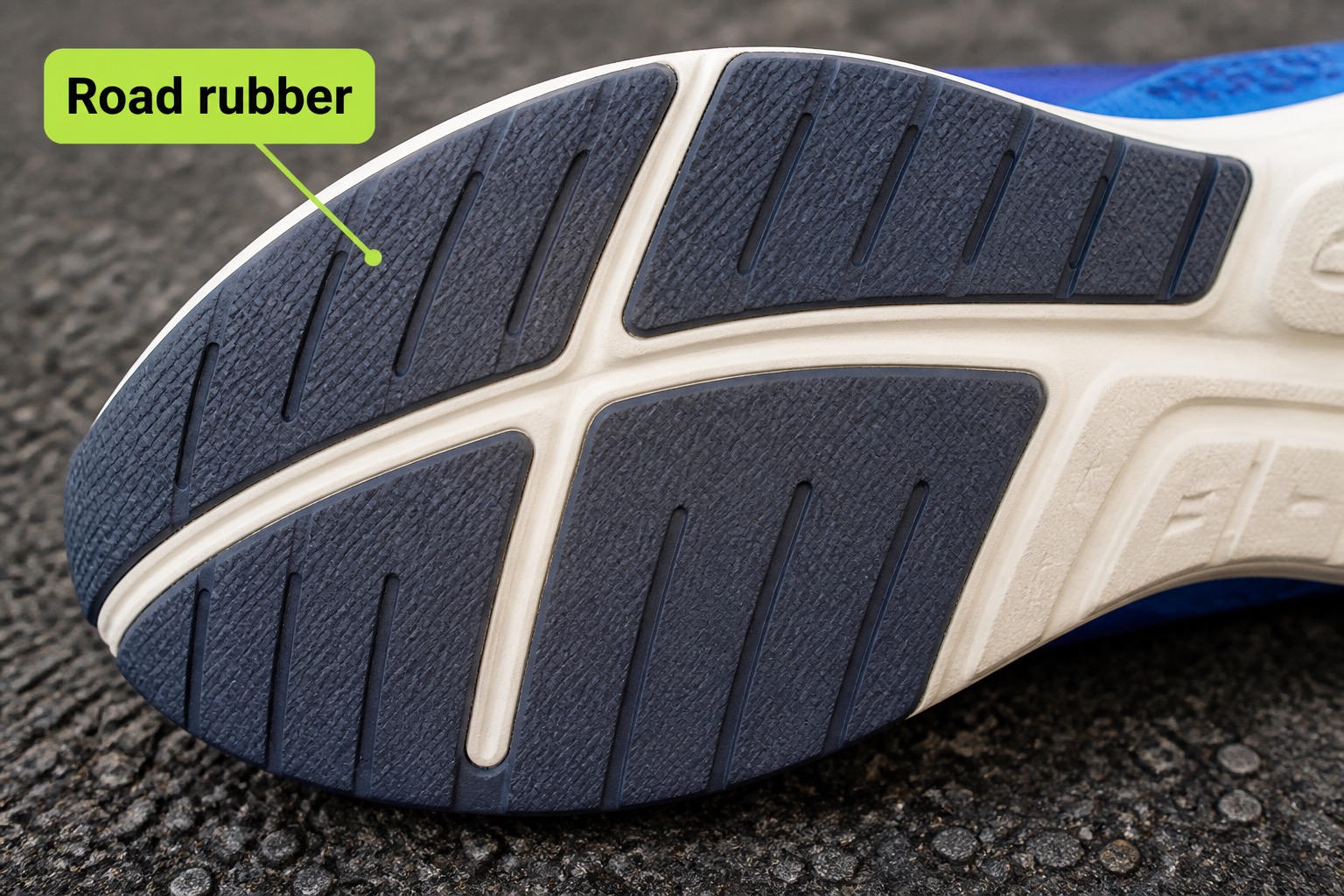
Road shoes are tuned for repeated contact with pavement, track, treadmill and other firm, predictable surfaces. Smooth transitions, lower weight, cushioning and road-rubber durability usually lead the design.
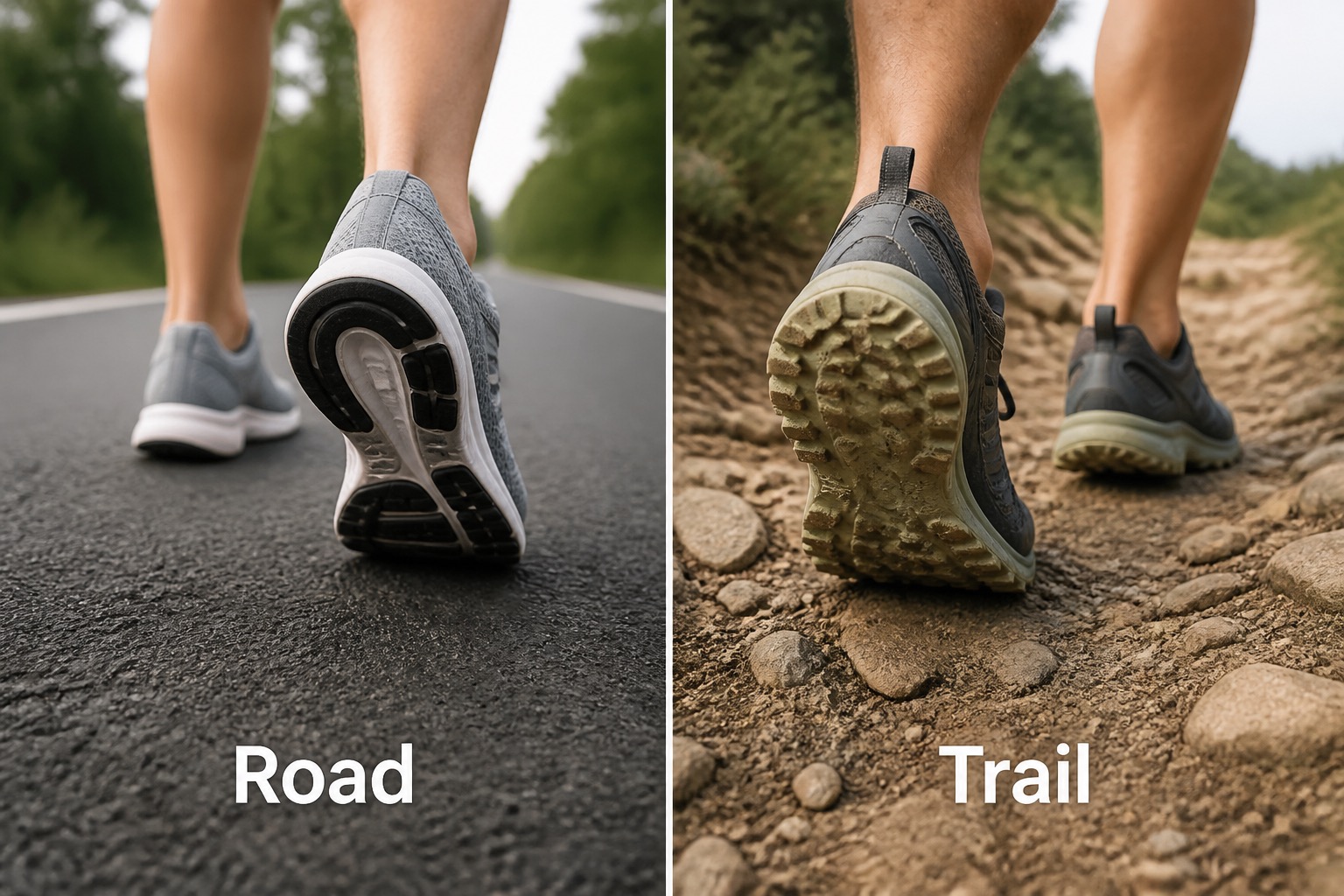
Trail shoes are tuned for variable ground. Their outsoles use lugs and compounds intended to grip dirt, rock or mud; uppers often add security and protection; platforms balance cushioning with control on uneven terrain.
Neither category is automatically better built or safer. A trail outsole can feel awkward on pavement, while a road shoe can lack traction and protection on technical ground. Match the tool to the surface and conditions.
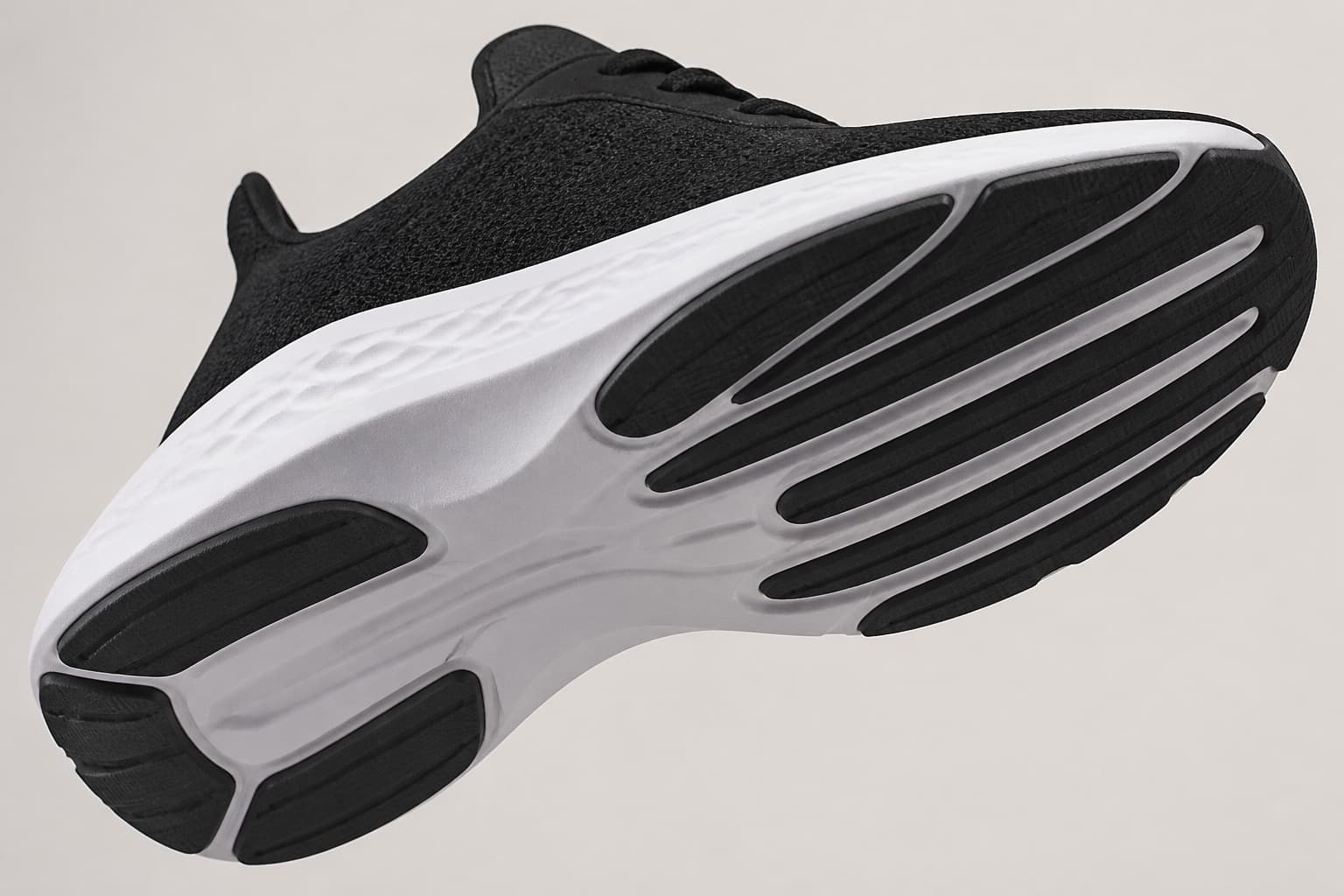 Road
RoadFlatter tread and road rubber for pavement — lighter geometry, less aggressive grip.
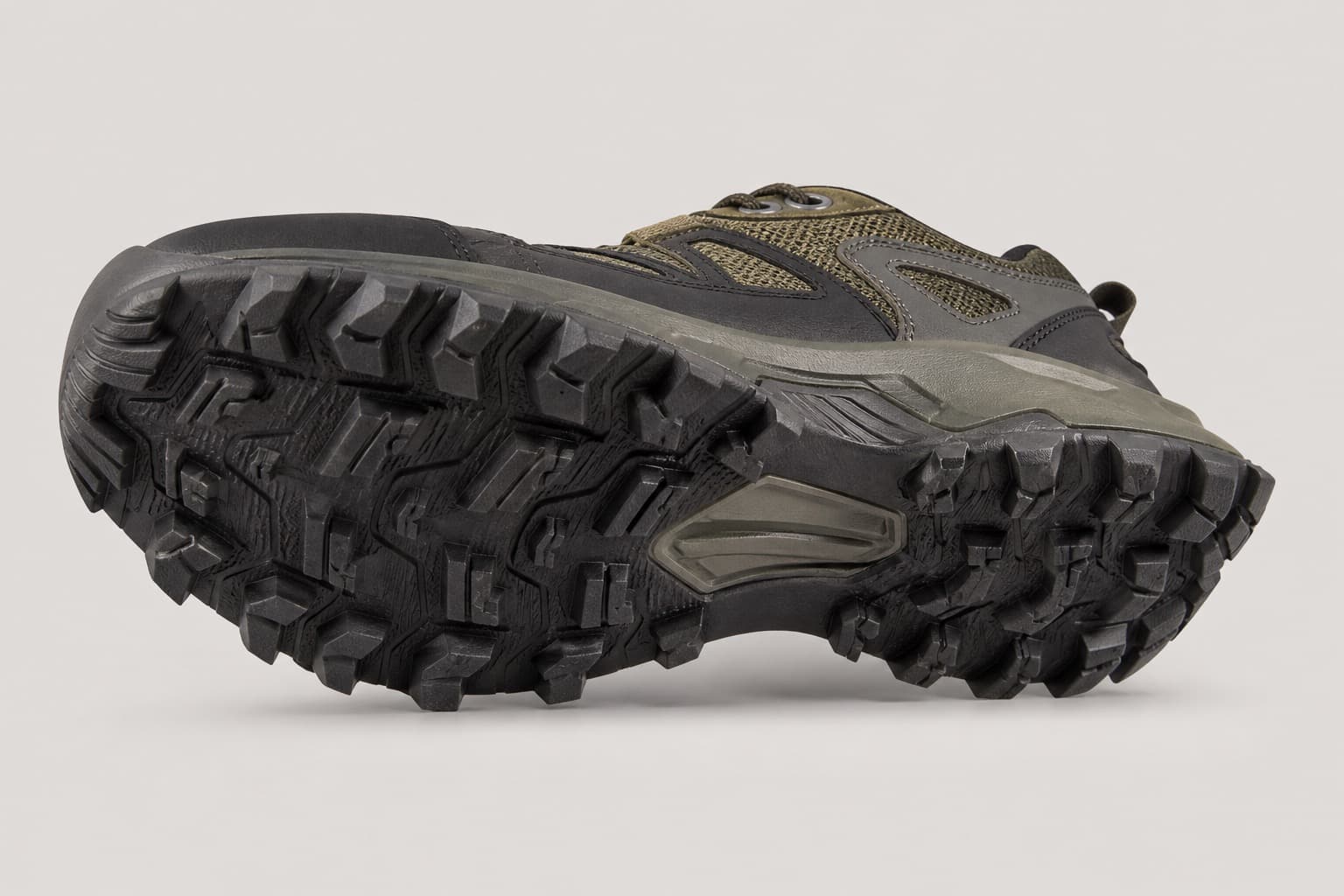 Trail
TrailDeeper multidirectional lugs and a more planted base for dirt, rock and uneven ground.
2Road vs trail running shoes at a glance
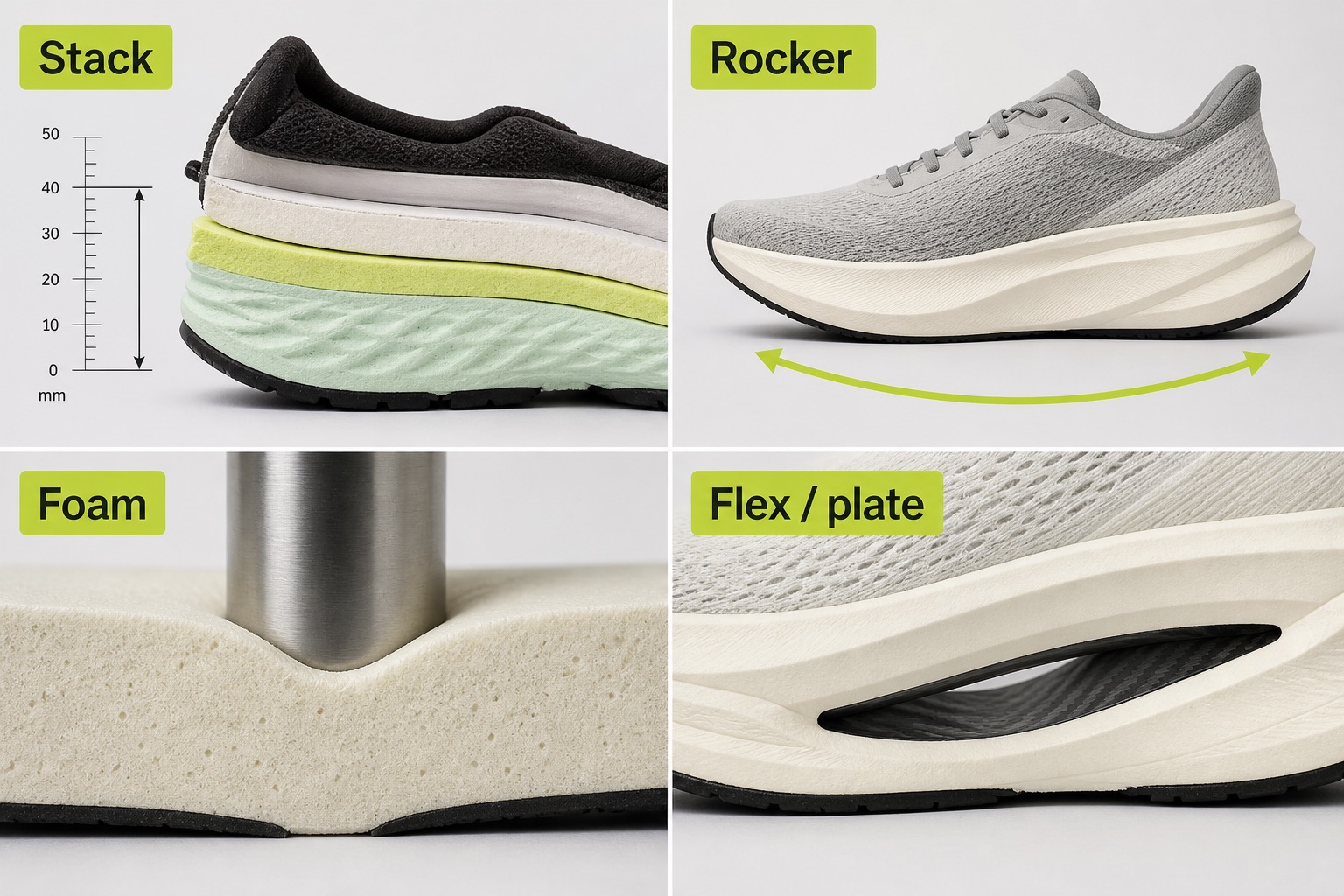
| Road shoe tendency | Trail shoe tendency | Why it matters | |
|---|---|---|---|
| Outsole | Flatter tread and strategic rubber | Deeper, spaced lugs and off-road compounds | Grip depends on surface, moisture and tread pattern |
| Stack / protection | Cushioning for firm repetitive impact | Protection balanced with uneven-ground control | Very tall or soft platforms can feel less precise on technical terrain |
| Fit | Comfort and road-speed lockdown | Secure midfoot/heel with room for descents | Foot movement inside the shoe is costly on cambers and downhills |
| Rock protection | Usually minimal | May use a rock plate, firmer layer or protective geometry | Helps blunt sharp trail contact but can reduce flexibility |
| Upper | Breathable, lightweight mesh | Reinforcement and debris resistance | Protection can add heat, stiffness and weight |
| Weight | Often lighter for comparable role | Often heavier from rubber and protection | Terrain confidence may be worth more than pace efficiency |
These are category tendencies. Door-to-trail, gravel and race models deliberately blur them.
Look for
Road shoe tendency
- Outsole: Flatter tread and strategic rubber
- Stack / protection: Cushioning for firm repetitive impact
- Fit: Comfort and road-speed lockdown
- Rock protection: Usually minimal
Look for
Trail shoe tendency
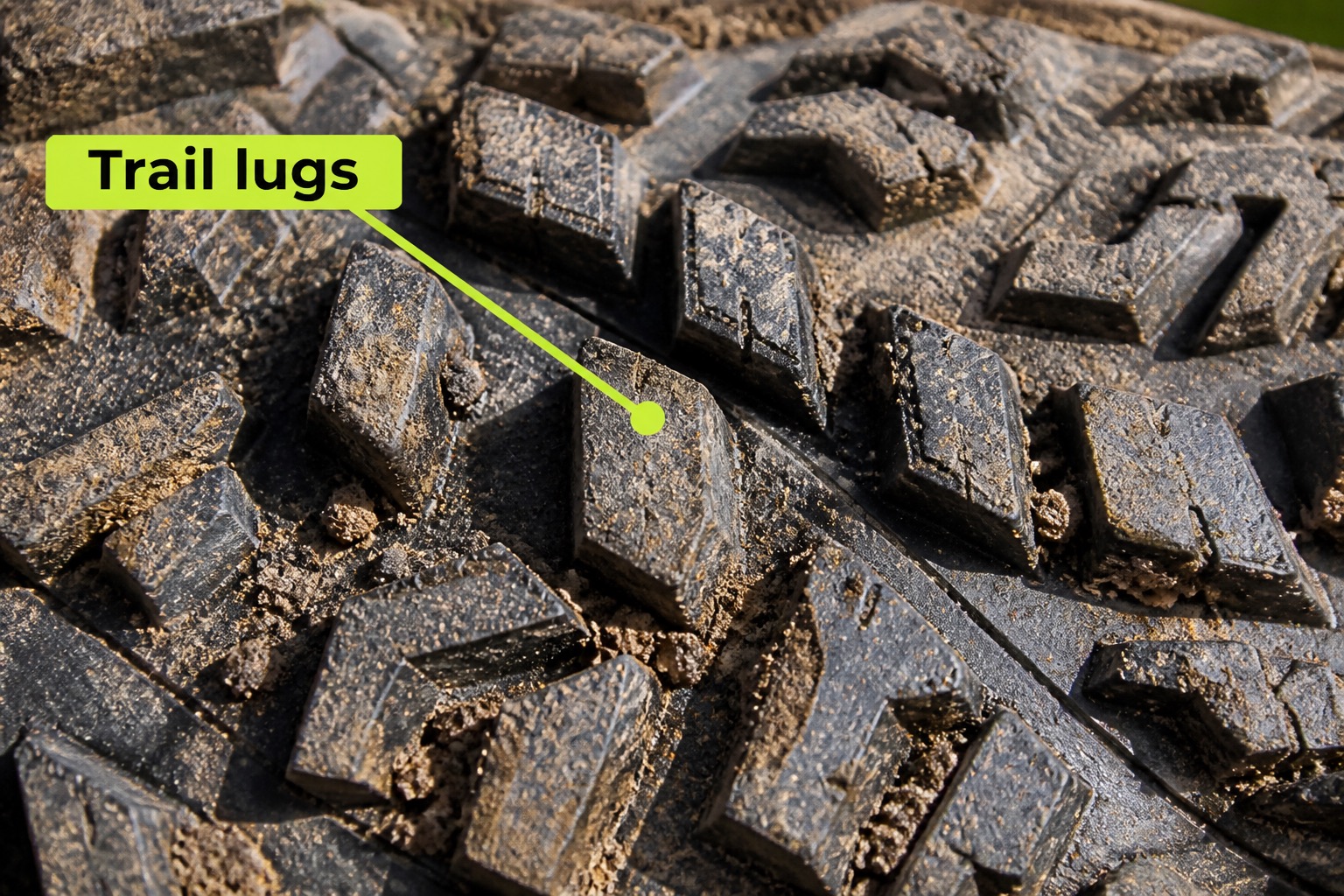
- Outsole: Deeper, spaced lugs and off-road compounds
- Stack / protection: Protection balanced with uneven-ground control
- Fit: Secure midfoot/heel with room for descents
- Rock protection: May use a rock plate, firmer layer or protective geometry
3The five factors that should drive the choice
Outsole and lugs
- What it is
- The rubber compound, coverage and tread projections contacting the ground.
- How it changes the choice
- Flatter tread suits pavement; deeper or spaced lugs bite loose soil and clear mud.
- What you may notice
- Smooth road contact versus traction and tread sensation off-road.
Stack and protection
- What it is
- Foam height plus rock plates, films, firmer layers and protective geometry.
- How it changes the choice
- Separates the foot from impact and sharp objects while affecting ground feel.
- What you may notice
- More isolation, or more precision when protection is lower.
Last and lockdown
- What it is
- The shoe shape plus how securely the upper holds heel and midfoot.
- How it changes the choice
- Controls internal foot movement on turns, cambers, climbs and descents.
- What you may notice
- Confidence without toe impact or pressure—if the shape suits your foot.
Upper construction
- What it is
- Mesh, overlays, toe protection, tongue and debris-management features.
- How it changes the choice
- Trades breathability and low weight for security and protection.
- What you may notice
- Cooler road comfort or a more armoured trail feel.
Weight and agility
- What it is
- The mass of foam, rubber, upper reinforcement and protective structures.
- How it changes the choice
- Less material can feel quicker; more structure can improve confidence and durability.
- What you may notice
- Road efficiency versus trail security, with wide variation inside each category.
4What to look for in each factor
Use these checks on fit, ride and job match — verify on a short shakeout, not only on a shelf comparison.
Look for
Outsole and lugs
- The rubber compound, coverage and tread projections contacting the ground.
- Watch for: Smooth road contact versus traction and tread sensation off-road.
- Decision tip: Flatter tread suits pavement; deeper or spaced lugs bite loose soil and clear mud.
Look for
Stack and protection
- Foam height plus rock plates, films, firmer layers and protective geometry.
- Watch for: More isolation, or more precision when protection is lower.
- Decision tip: Separates the foot from impact and sharp objects while affecting ground feel.
Look for
Last and lockdown
- The shoe shape plus how securely the upper holds heel and midfoot.
- Watch for: Confidence without toe impact or pressure—if the shape suits your foot.
- Decision tip: Controls internal foot movement on turns, cambers, climbs and descents.
Look for
Upper construction
- Mesh, overlays, toe protection, tongue and debris-management features.
- Watch for: Cooler road comfort or a more armoured trail feel.
- Decision tip: Trades breathability and low weight for security and protection.
5When a road shoe is the right choice
Use a road shoe when most of the run is pavement, track, treadmill or smooth hard-packed path in predictable conditions. Its flatter outsole presents stable contact on hard surfaces and usually rolls more smoothly than aggressive trail lugs.
Road shoes also offer the widest range of specialised roles: easy, daily, tempo, max-cushion and carbon race. Pick within that category for the session rather than assuming every road model is versatile.
Short, dry park paths do not automatically require a trail shoe. If the surface is firm, non-technical and your road outsole grips securely, staying in the road category may be simpler and lighter.
6When a trail shoe earns its place
Use a trail shoe when loose soil, mud, wet rock, roots, sharp stones, steep grades or sustained uneven terrain make traction and protection central to the run. The more technical the route, the less useful a road shoe’s weight advantage becomes.
Choose tread for the actual trail. Widely spaced aggressive lugs suit mud and loose ground; lower-profile tread is often smoother on hardpack and mixed routes. No outsole compound grips every wet surface equally.
For long trail days, cushioning still matters, but so do platform control, upper security and swelling room. Maximum stack without suitable geometry can feel vague on off-camber ground.
7Hybrid and door-to-trail shoes are compromises by design
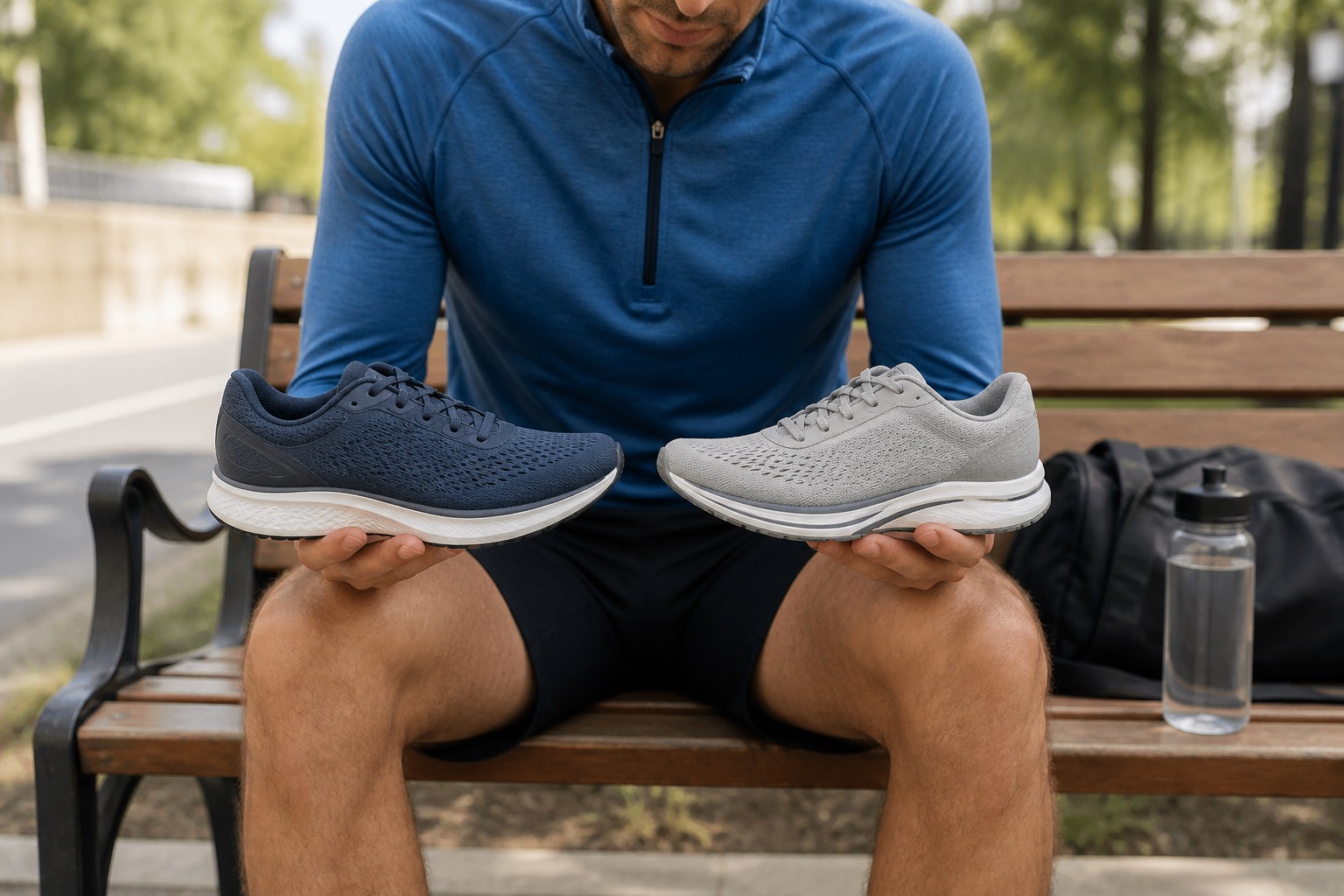
A hybrid or door-to-trail shoe uses moderate tread and road-friendly geometry to cover pavement connectors, gravel and non-technical trail. It can be the most practical one-shoe answer when every run mixes surfaces.
The compromise appears at the extremes. Hybrid lugs may lack bite in deep mud, while their tread and reinforcement may feel heavier or less smooth than a dedicated road daily trainer.
“Approach shoe” can mean a climbing-oriented hiking shoe built for scrambling to a route, not a running hybrid. Check whether the product is designed for sustained running before using the label as a substitute for specifications.
8Match the shoe to the route

- 1
Pavement / treadmill
Choose a road shoe for smooth contact, lower weight and the broadest choice of training roles.
Explore → - 2
Dry park paths
Road tread often works when surfaces are firm and non-technical; judge grip from conditions.
- 3
Gravel / mixed route
A hybrid or mild-lug trail shoe can add confidence without making road connectors miserable.
- 4
Rocky technical trail
Prioritise secure fit, protective stack geometry, suitable tread and underfoot protection.
Explore → - 5
Mud / loose ground
Deeper, well-spaced lugs matter more than maximum cushioning or road speed.
- 6
Long trail day
Balance grip and protection with sustained fit, cushioning and weight.
9What trail capability adds—and costs
What you may gain
- · More suitable traction on loose, wet or uneven ground
- · A more secure upper for turns, cambers and descents
- · Added toe and underfoot protection
- · Durability features aimed at trail abrasion
What you may give up
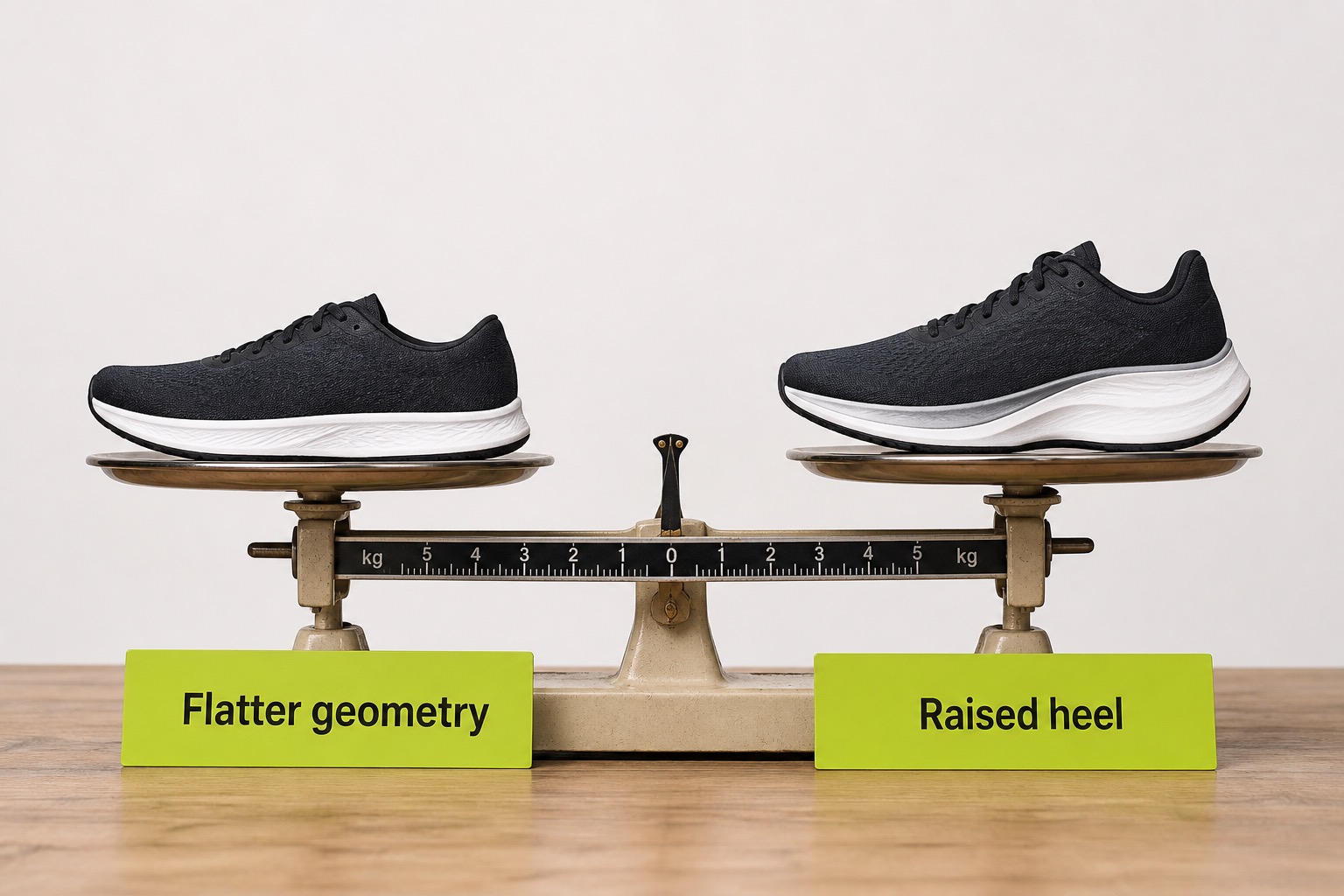
- · More rubber and reinforcement can add weight
- · Aggressive lugs can feel rough or unstable on pavement
- · Protective structures can reduce flexibility and ground feel
- · Trail fit and upper protection may feel warmer or less relaxed
A dedicated trail shoe is valuable when these gains solve recurring terrain problems—not simply because it looks more rugged.
10Choose road, trail or hybrid step by step
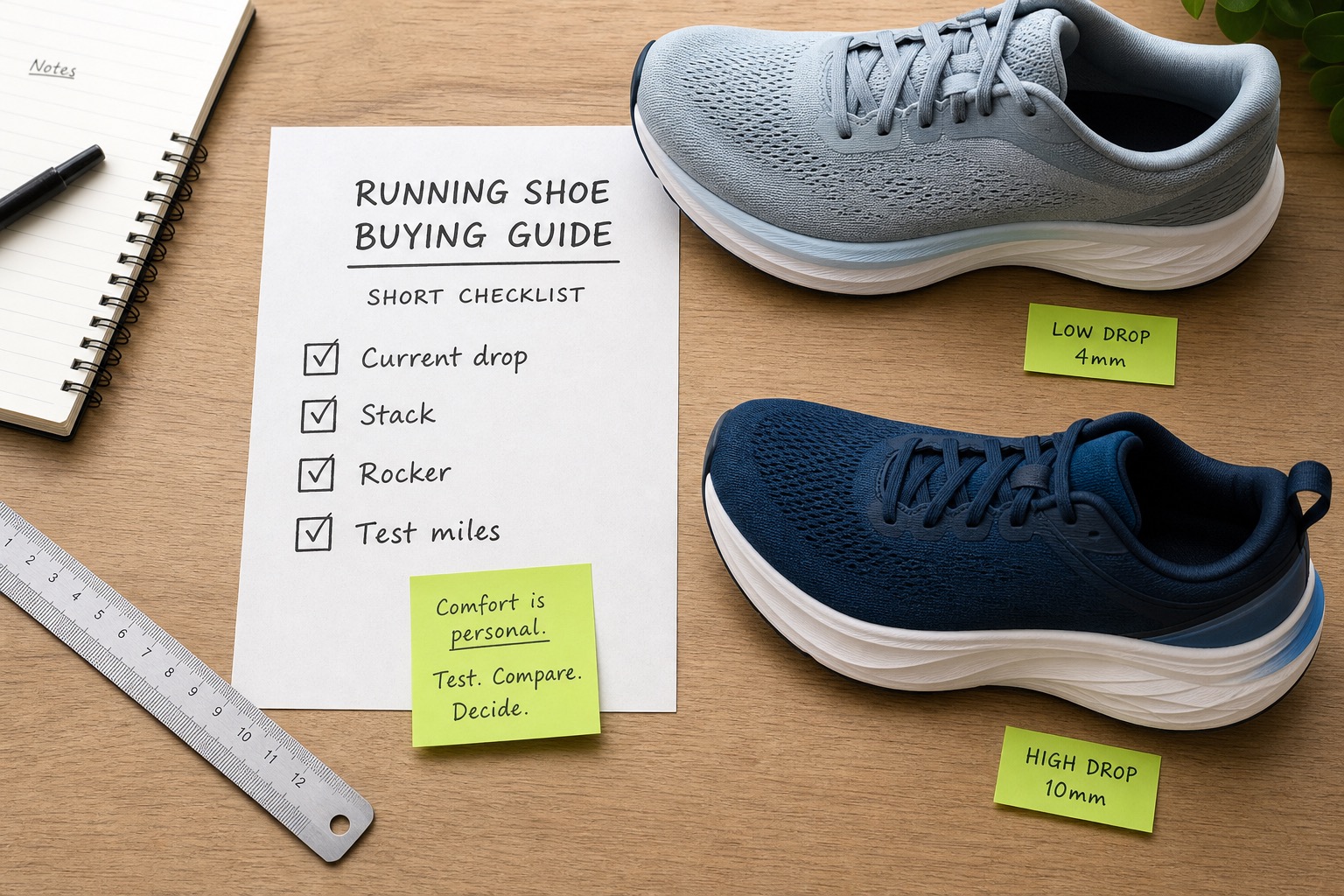
- 1
Count the surfaces
Estimate how much of the actual route is pavement, smooth path, gravel or technical trail.
- 2
Check likely conditions
Dry hardpack, mud, wet rock and snow demand different tread and compounds.
- 3
Rate technicality
Roots, rocks, cambers and steep descents raise the value of lockdown, control and protection.
- 4
Select enough outsole
Use the least aggressive tread that reliably handles the hardest recurring section.
- 5
Confirm terrain-ready fit
Secure heel and midfoot while preserving toe room for descents and longer runs.
- 6
Choose cushioning and weight
After grip and fit, select the protection and agility appropriate to distance and pace.
- 7
Decide whether to specialise
If one route contains opposite extremes, a road/trail rotation may beat one compromised hybrid.
Where does most of the run happen?
Road / treadmill
Choose a road shoe unless off-road sections create a real traction problem.
Road + smooth trail
Consider a door-to-trail model or a road shoe with dependable all-surface grip.
Mostly trail
Choose trail tread for the conditions, then refine protection, cushion and fit.
Technical / muddy
Prioritise aggressive grip, secure fit and protection over road smoothness.
11Road and trail designs in the catalog
These examples illustrate terrain-led design differences. They are not an automatic ranking; use the linked Best guides for current recommendations.
Agile aggressive-grip trail example
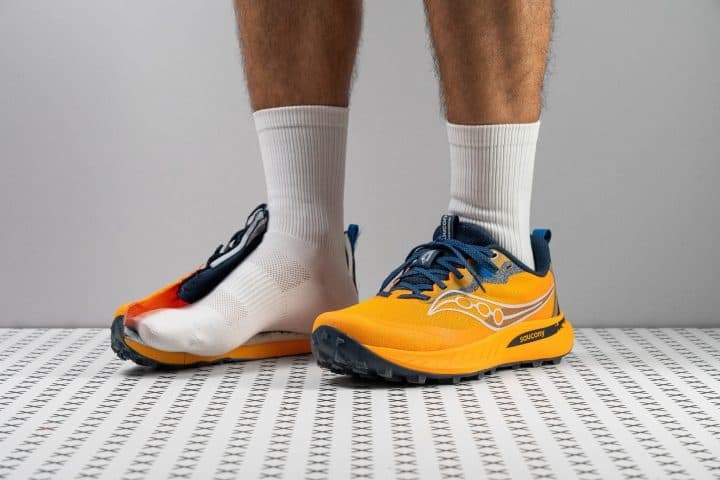
8.3 Kitletics Score
Saucony Peregrine 15
Why it illustrates the category: PWRTRAC aggressive trail grip, a reinforced mesh upper, medium balanced cushioning and a 4 mm drop target technical singletrack and muddy conditions.
Best for
- · Technical trail
- · Mud and loose ground
- · Runners wanting a more connected trail platform
Trade-off
Aggressive tread and firmer hardpack feel make long road connectors a weak fit.
Read review →From € 150Protective long-trail example
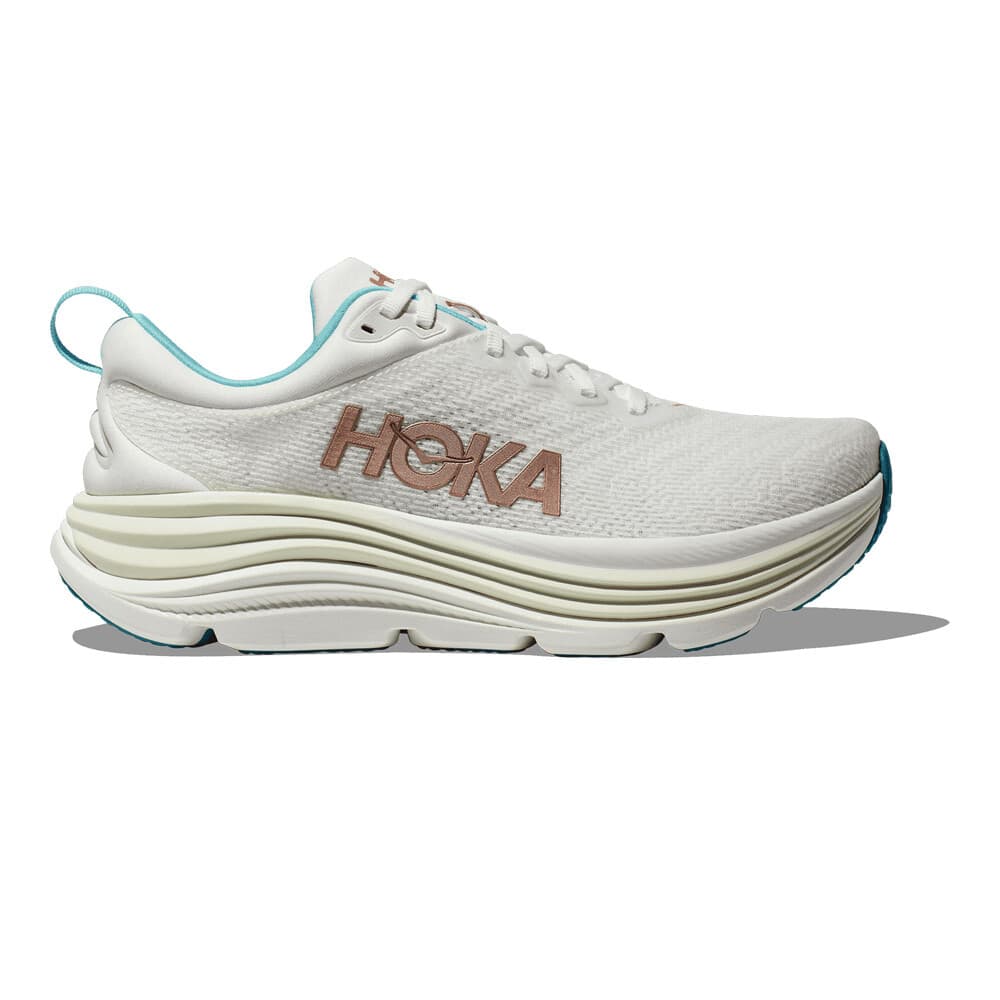
8.7 Kitletics Score
HOKA Speedgoat 6
Why it illustrates the category: High balanced cushioning, a protective ride and Vibram Megagrip with Traction Lug prioritise technical terrain and longer mountain days.
Best for
- · Long trail runs
- · Technical terrain
- · Runners wanting more cushioning and trail grip
Trade-off
More trail structure and rubber than needed for routine pavement running.
Read review →From € 170Lively high-cushion road example
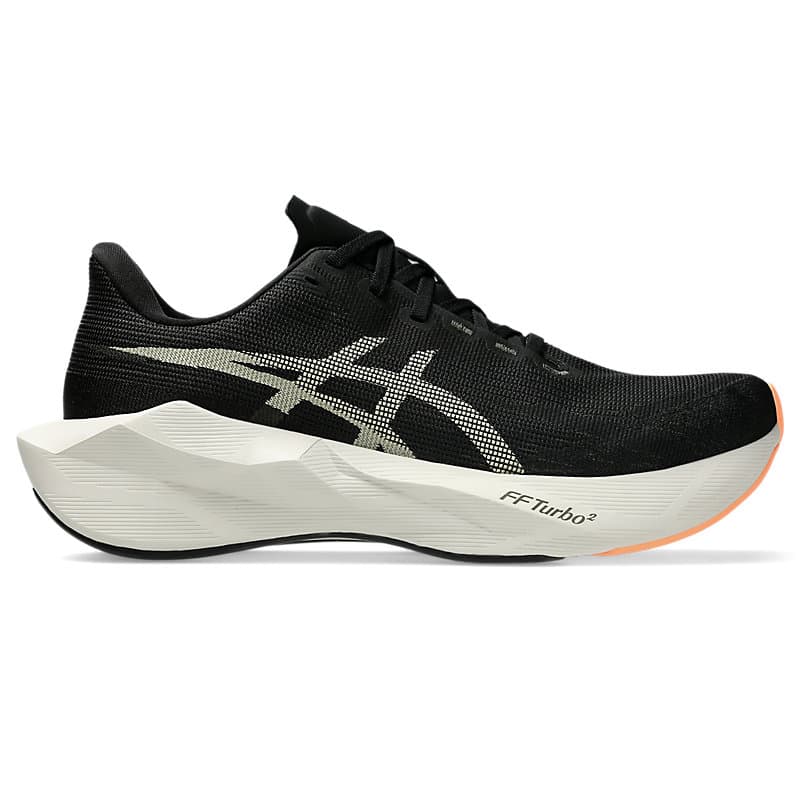
9.0 Kitletics Score
ASICS Novablast 6
Why it illustrates the category: A road-focused outsole, soft high cushioning, high energy return and rockered neutral ride favour varied road mileage rather than technical grip.
Best for
- · Daily road training
- · Long road runs
- · Runners wanting soft plus lively
Trade-off
Tall soft road geometry and tread are not designed for loose or technical trail.
Read review →From € 149Conventional durable road example
8.6 Kitletics Score
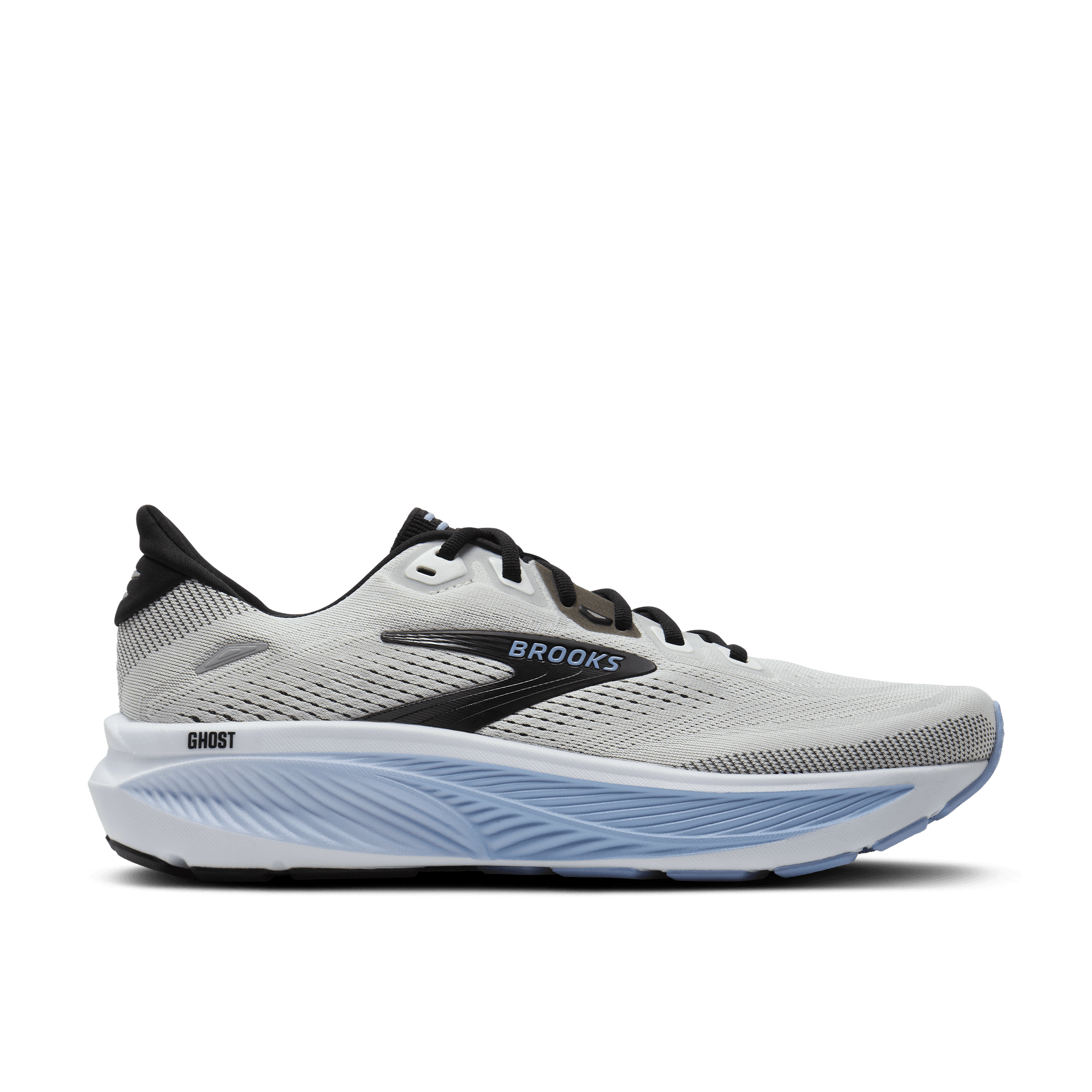
Brooks Ghost 18
Why it illustrates the category: Smooth high-cushion road construction, a rubber outsole and broad width ladder emphasise predictable daily fit and durability.
Best for
- · Daily pavement
- · Beginners
- · Runners needing narrow through extra-wide options
Trade-off
Road grip and breathable mesh offer less technical traction and protection than dedicated trail designs.
Read review →From € 144
12Compare two trail and two road shoes
| Product | Support approach | Cushion | Drop | Widths | Best use | Key trade-off |
|---|---|---|---|---|---|---|
Saucony Peregrine 15 mild-stability | PWRRUN | medium | 4 mm | standard, wide | Agile technical trail | Not ideal on long road connectors |
HOKA Speedgoat 6 mild-stability | CMEVA | high | 5 mm | standard, wide | Protective long trail | Overbuilt for easy road miles |
ASICS Novablast 6 neutral | FF BLAST MAX + FF TURBO SQUARED trampoline pod | high | 8 mm | standard, wide | Lively road daily | Not a stability shoe |
Brooks Ghost 18 neutral | DNA LOFT v3 | high | 12 mm | narrow, standard, wide, extra-wide | Smooth road daily | Higher drop |
13Common road-vs-trail mistakes
Buying the most rugged shoe
More lug, reinforcement and protection can be unnecessary weight and stiffness on smooth routes.
Taking road grip onto technical trail
A comfortable road shoe can still lack traction, lockdown and underfoot protection.
Using aggressive trail shoes for road volume
Deep lugs can feel awkward, wear differently and make pavement transitions less smooth.
Treating every trail alike
Dry hardpack, mud, wet rock and alpine scree place different demands on tread.
Choosing stack without control
More cushioning can help long days, but tall soft platforms need suitable geometry on uneven ground.
Sizing only for standing comfort
Trail descents and cambers expose heel slip, toe impact and lateral movement.
Treating terrain categories as injury prevention
Shoe type does not diagnose or guarantee prevention. Persistent pain needs qualified assessment.
14Frequently asked questions
- Can I use road shoes on trails?
- Light paths sometimes work, but technical trail needs grip and protection that road outsoles lack. Prefer trail-classified shoes for off-road training.
- Can I run trails in road shoes?
- Light gravel or dry fire roads may be fine. Technical, muddy or rocky trails usually need trail outsoles and protection road shoes do not provide.
- Can I use trail shoes on the road?
- Occasionally, yes, but aggressive lugs wear faster on asphalt and can feel harsh. Prefer road shoes for mostly paved volume.
- What is a hybrid or approach running shoe?
- Hybrids sit between road and trail — often milder lugs and some protection. Useful for mixed surfaces, less ideal as a pure technical trail tool.
- Do trail shoes need a rock plate?
- Not always. Rock plates help on sharp rocky terrain. Softer trails and fire roads may not need one. Match protection to the trails you actually run.
Road and trail design examples
Browse running shoes →Saucony
Peregrine 15
Agile technical trail
8.3 GoodFrom € 150
View review →HOKA
Speedgoat 6
Protective long trail
8.7 Very GoodFrom € 170
View review →ASICS
Novablast 6
Lively road daily
9.0 ExcellentFrom € 149
View review →Brooks
Ghost 18
Smooth road daily
8.6 Very GoodFrom € 144
View review →
Head-to-head comparisons
Continue the decision with focused head-to-heads — who should choose which, and the trade-offs that matter.
How we research
This comparison uses catalog terrain, grip, cushioning, stability, upper, outsole, plate and width fields alongside manufacturer construction details. Product examples and comparison specifications render from the current catalog rather than hardcoded prices.