The short version
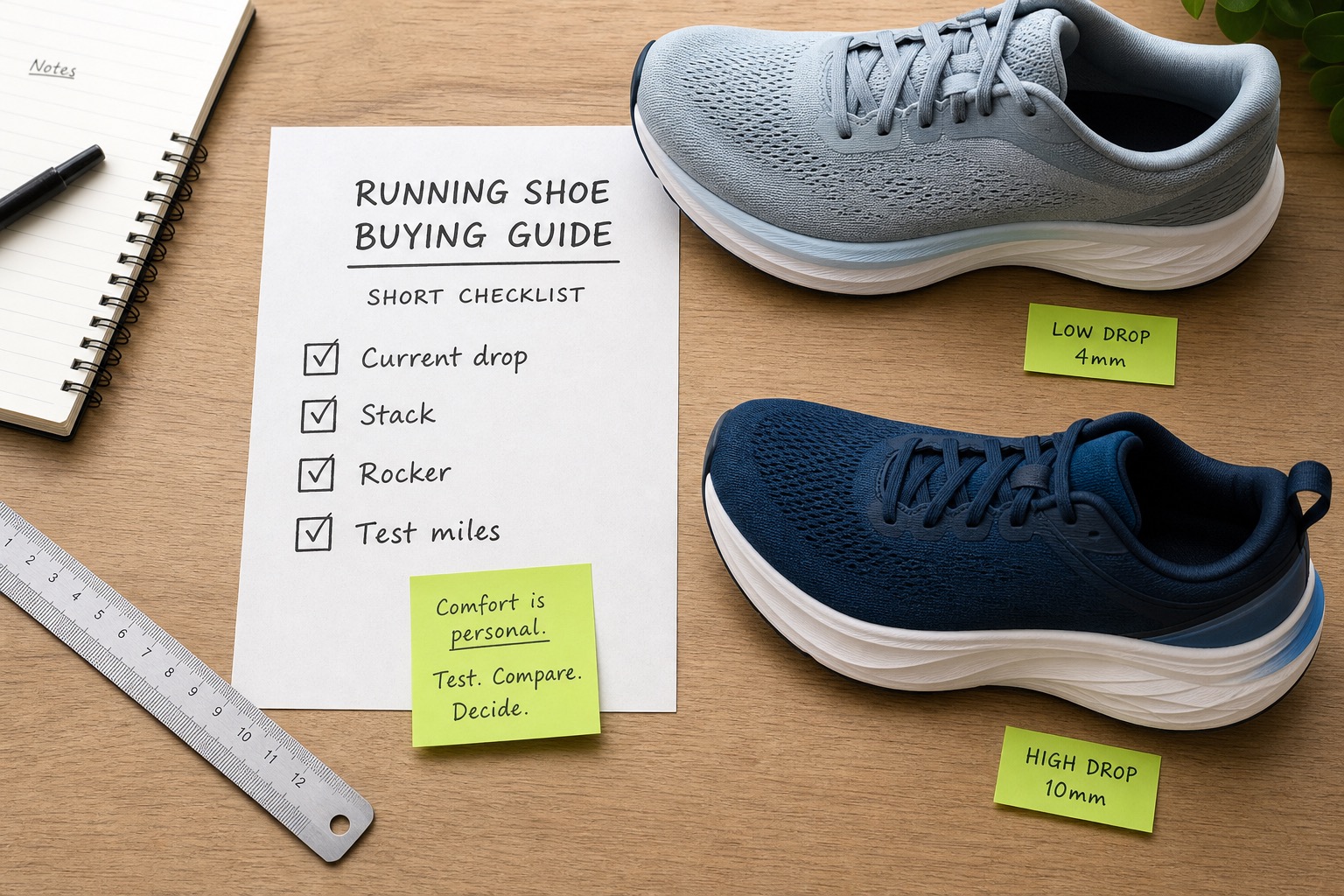
- Stack is platform height; drop is the difference between heel and forefoot stack.
- Cushioning describes amount; cushion feel describes compression; energy return describes rebound.
- Neutral and stability describe platform design—not gait diagnoses or medical prescriptions.
- A plate works with foam and rocker geometry; it does not automatically make every runner faster.
- Last and upper shape determine fit, while platform width describes the midsole footprint.
- Use terms in groups: start with role and terrain, confirm fit, then compare ride and geometry.
Kitletics explains product terminology and construction. Shoe specifications do not diagnose gait, prescribe medical footwear, prevent injury or treat pain. Consult a qualified clinician for persistent symptoms or medical footwear questions.
Approaches in this guide
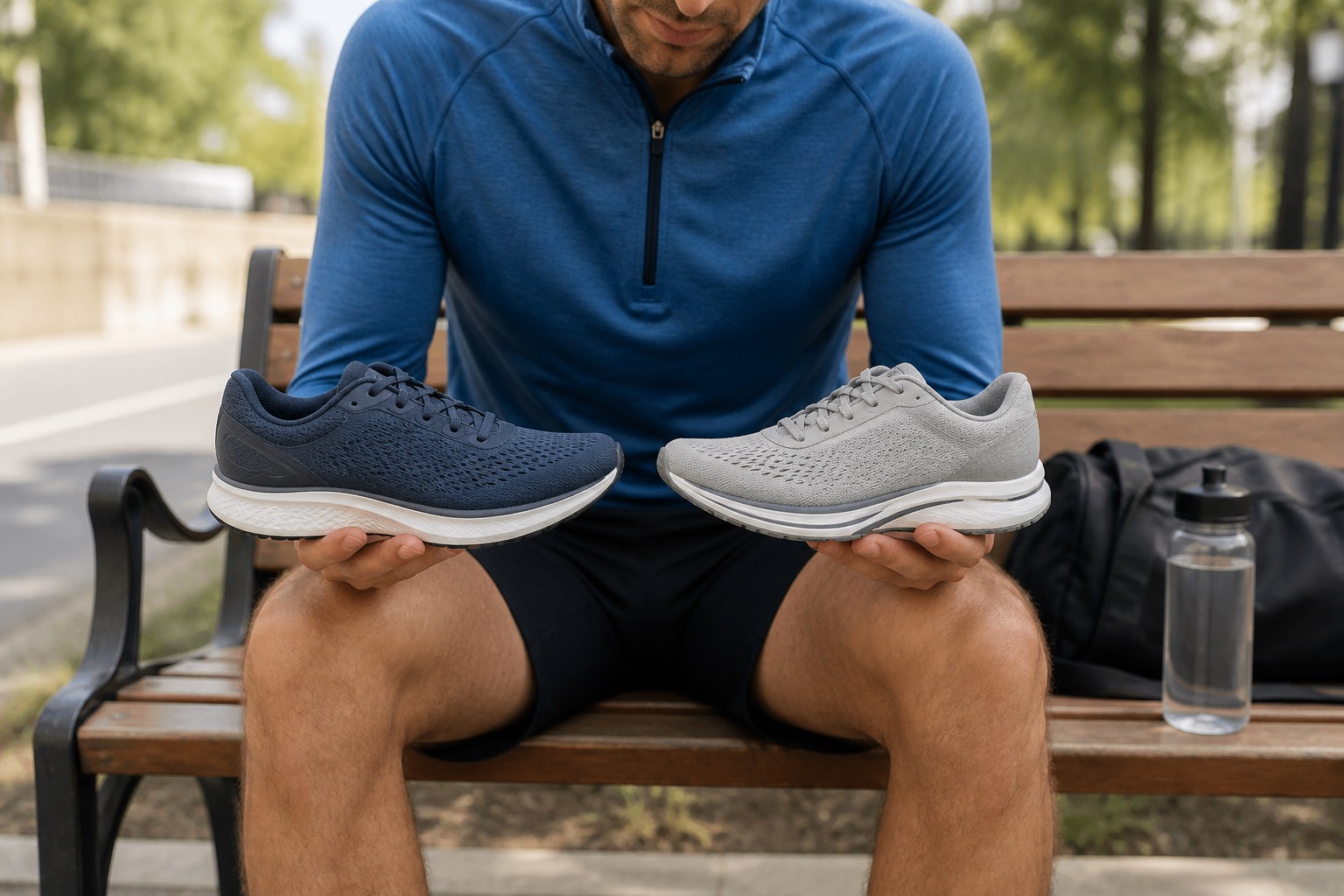
1Running shoe terms should answer shopping questions
A specification matters only when it changes the fit, ride or job a shoe can do.
Running-shoe language mixes measurable specifications, controlled catalog categories and brand marketing. Stack and drop describe geometry. Cushion level, stability and energy return classify ride or design intent. Names such as “super foam” are less standardised.
Do not choose from one number or label. A high-stack shoe can feel firm; a neutral shoe can feel planted; a plated shoe can be a training tool rather than a racer. Read related terms together, then connect them to the runs you actually do.
Kitletics uses structured fields to make cross-brand comparison clearer. Those fields describe products, not your anatomy, gait or medical needs.
2Geometry terms: stack, drop, rocker and last
These terms describe the platform beneath and around the foot.
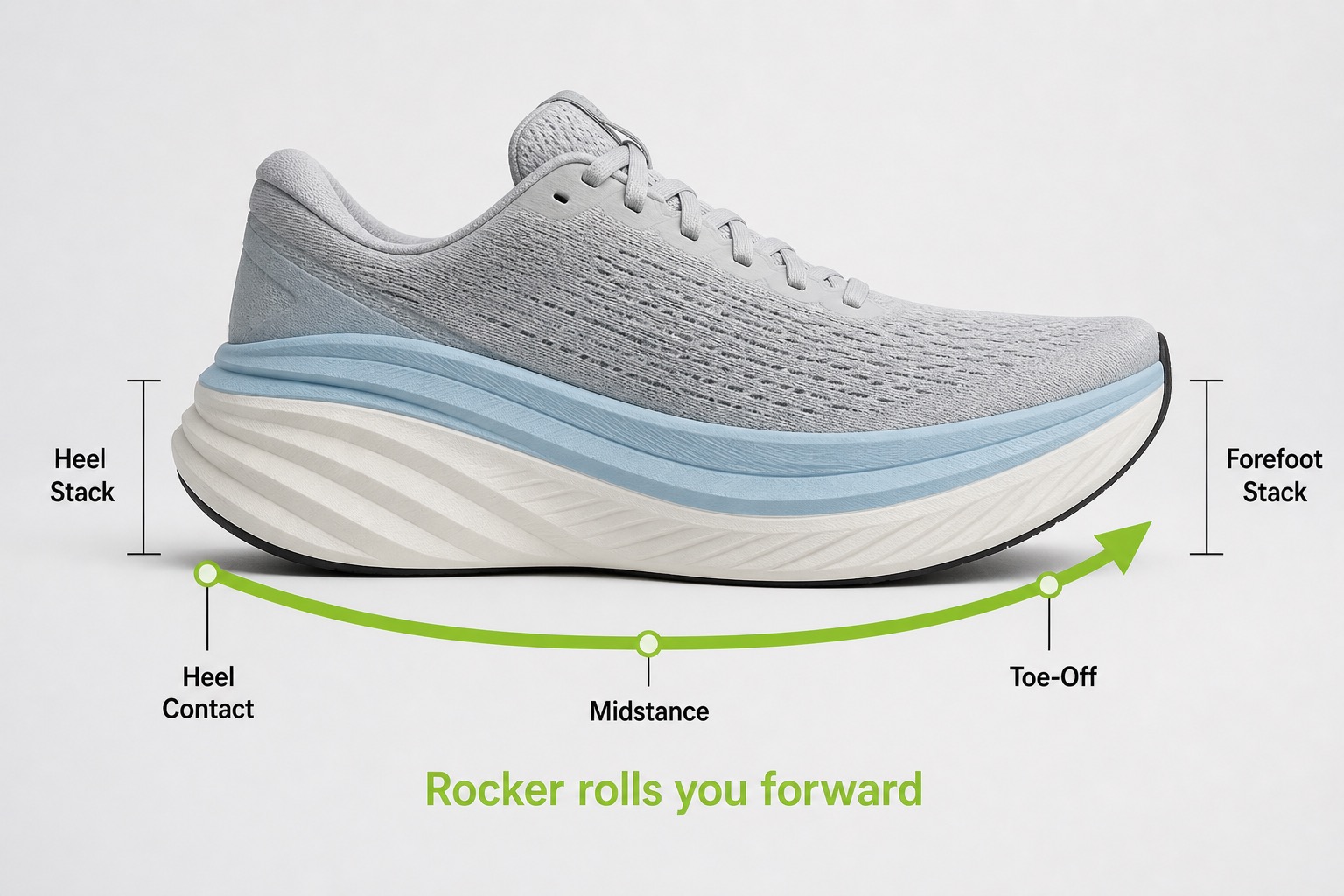
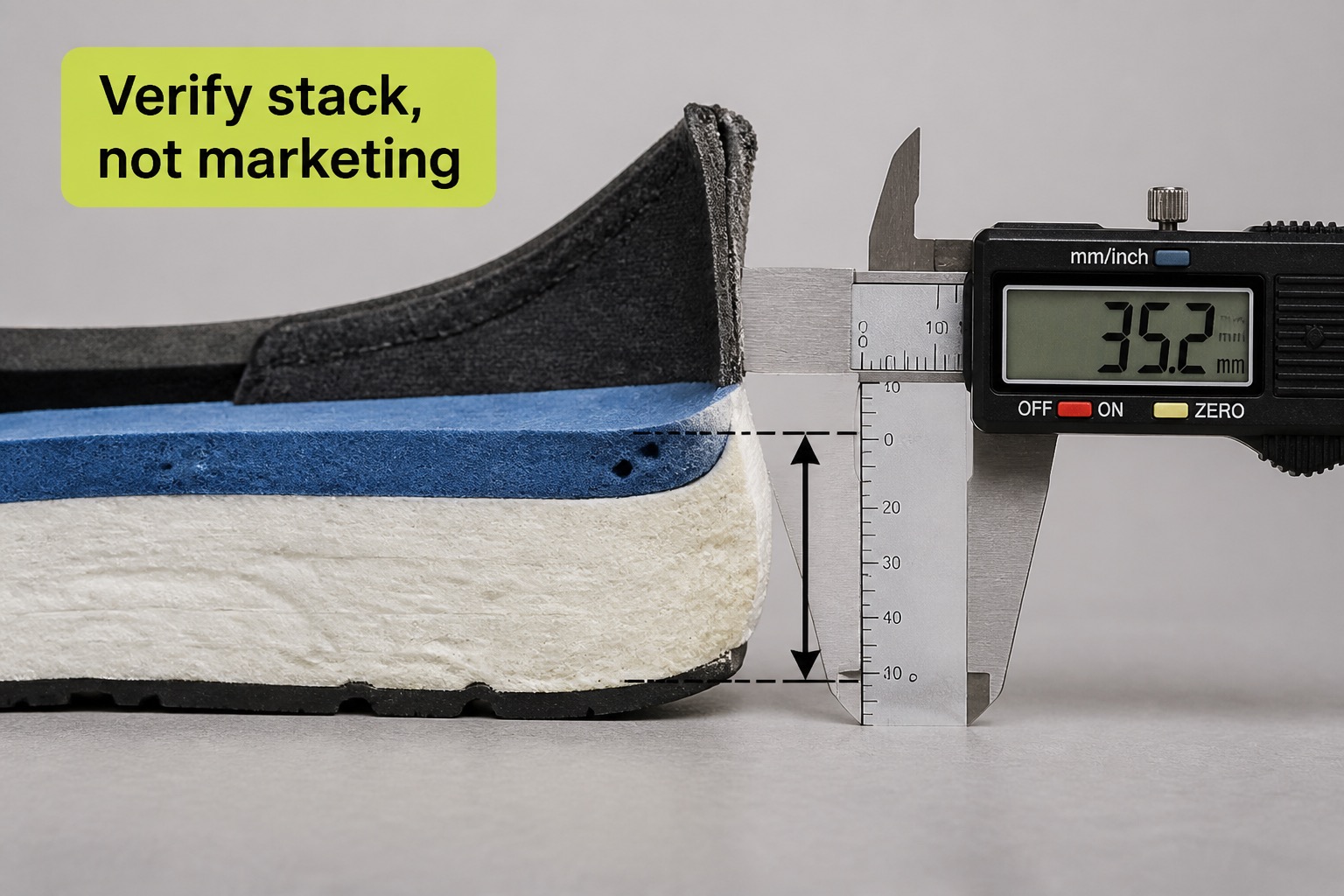
Stack height
- What it is
- The amount of material between the foot and ground, usually stated at heel and forefoot.
- How it changes the choice
- More stack can add protection and space for foam, while also increasing platform height and bulk.
- What you may notice
- More or less ground separation—not guaranteed softness.
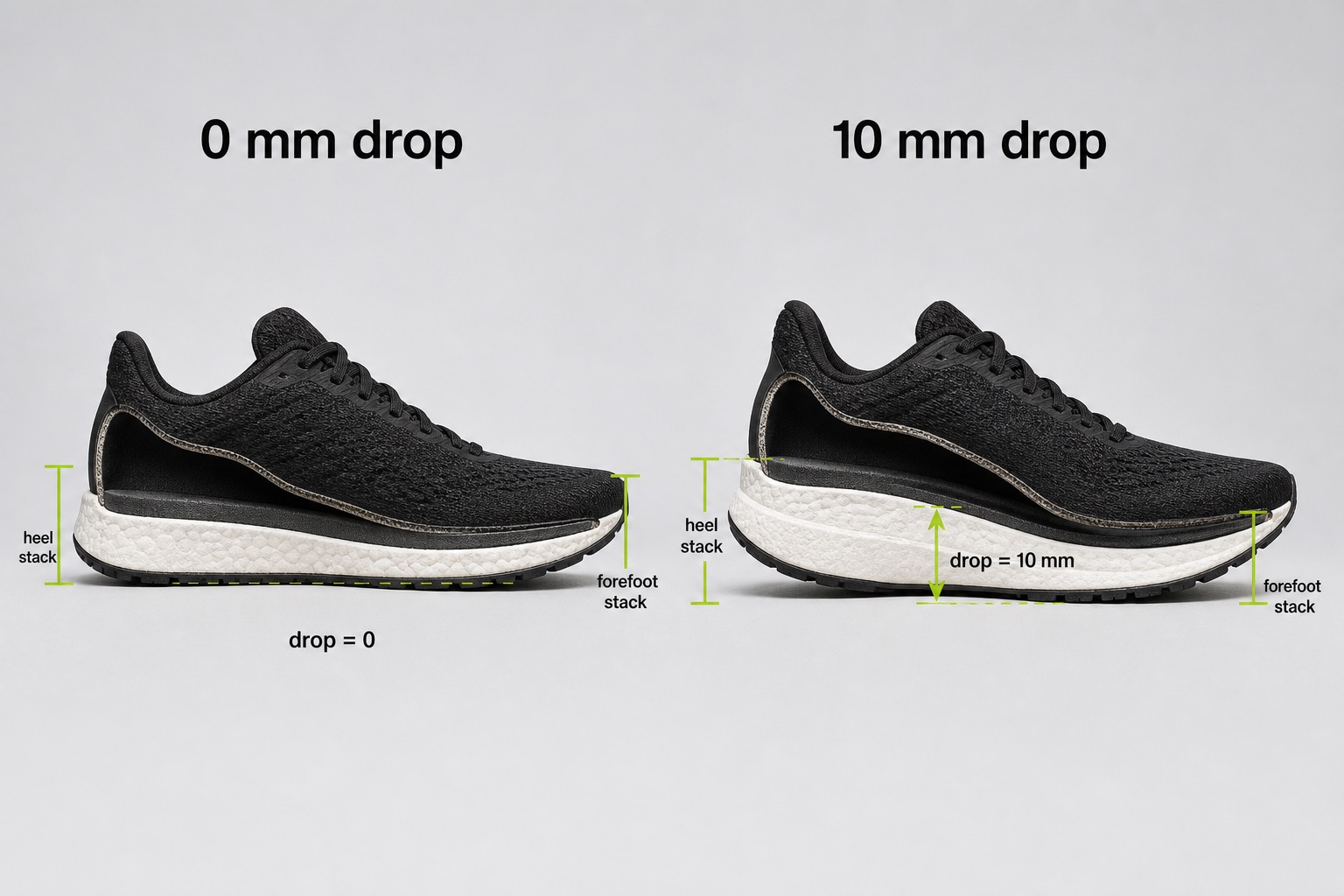
Heel-to-toe drop
- What it is
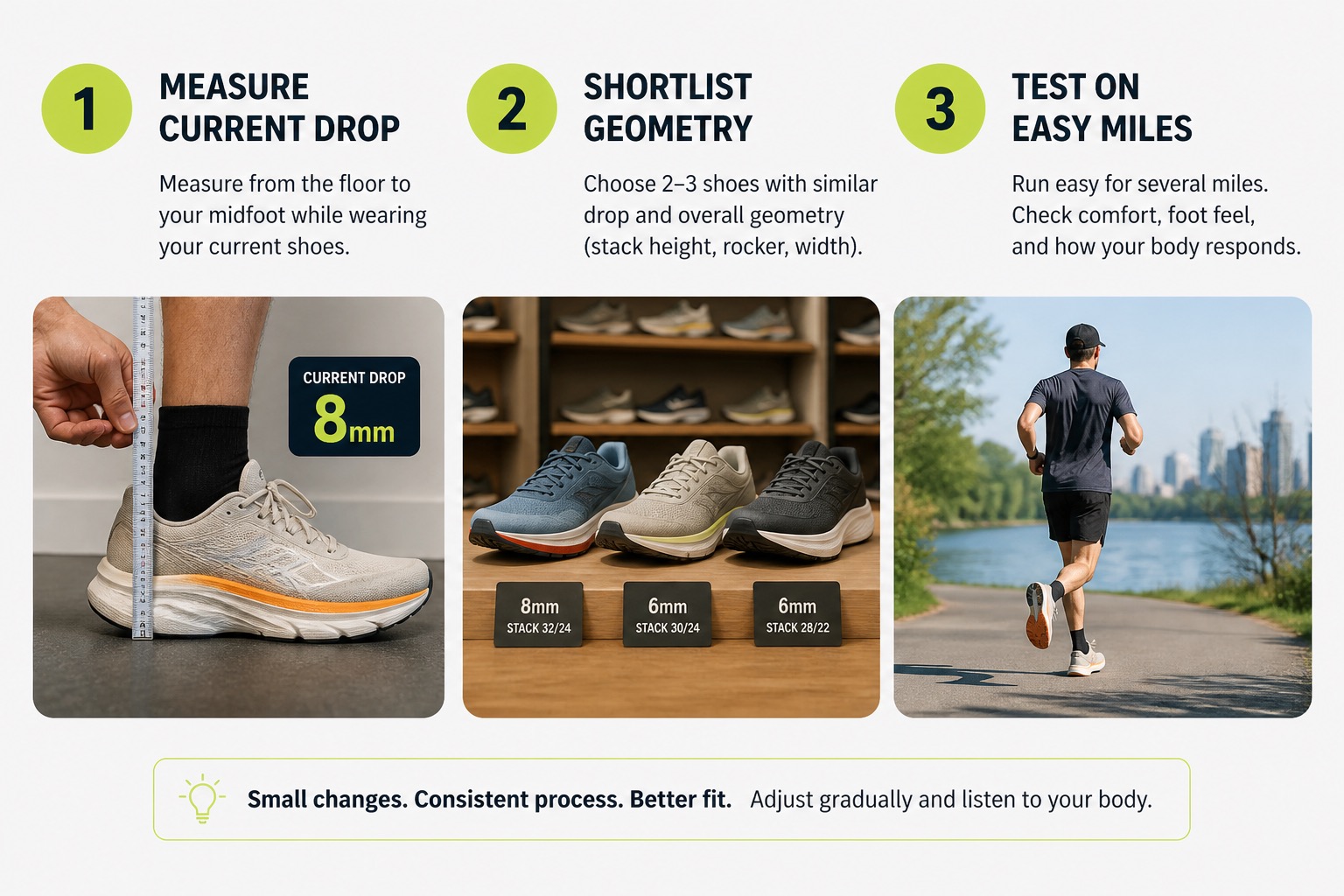
- The difference between heel and forefoot stack, normally measured in millimetres.
- How it changes the choice
- Alters platform geometry and how the shoe may load through transition.
- What you may notice
- A flatter or more heel-elevated stance, with adaptation varying by runner.
Rocker
- What it is
- Curved sole geometry that encourages the shoe to roll through stance.
- How it changes the choice
- Can smooth transitions, especially when the platform is tall or stiff.
- What you may notice
- An obvious rolling sensation—or little effect, depending on pace and stride.
Last
- What it is
- The three-dimensional form around which the shoe is shaped.
- How it changes the choice
- Influences toe-box shape, midfoot volume, heel shape and the overall fit character.
- What you may notice
- Whether the shoe feels tapered, roomy, secure, shallow or high-volume.
3What to look for in each factor
Use these checks on fit, ride and job match — verify on a short shakeout, not only on a shelf comparison.
Look for
Stack height
- The amount of material between the foot and ground, usually stated at heel and forefoot.
- Watch for: More or less ground separation—not guaranteed softness.
- Decision tip: More stack can add protection and space for foam, while also increasing platform height and bulk.
Look for
Heel-to-toe drop
- The difference between heel and forefoot stack, normally measured in millimetres.
- Watch for: A flatter or more heel-elevated stance, with adaptation varying by runner.
- Decision tip: Alters platform geometry and how the shoe may load through transition.
Look for
Rocker
- Curved sole geometry that encourages the shoe to roll through stance.
- Watch for: An obvious rolling sensation—or little effect, depending on pace and stride.
- Decision tip: Can smooth transitions, especially when the platform is tall or stiff.
Look for
Last
- The three-dimensional form around which the shoe is shaped.
- Watch for: Whether the shoe feels tapered, roomy, secure, shallow or high-volume.
- Decision tip: Influences toe-box shape, midfoot volume, heel shape and the overall fit character.
4Read stack and drop together
| What it tells you | Useful shopping question | Common mistake | |
|---|---|---|---|
| Heel stack | Material height under the heel | How tall is the rear platform? | Treating height as softness |
| Forefoot stack | Material height under the forefoot | How much forefoot protection is present? | Ignoring it when comparing two equal-drop shoes |
| Drop | Heel stack minus forefoot stack | How flat or elevated is the geometry? | Treating a number as a medical prescription |
| Rocker | Curvature and transition design | Does the shoe roll or flex through toe-off? | Assuming every tall shoe has the same transition |
Measurement methods can differ by source. Compare like-for-like data and allow for manufacturing tolerance.
Look for
What it tells you
- Heel stack: Material height under the heel
- Forefoot stack: Material height under the forefoot
- Drop: Heel stack minus forefoot stack
- Rocker: Curvature and transition design
Look for
Useful shopping question
- Heel stack: How tall is the rear platform?
- Forefoot stack: How much forefoot protection is present?
- Drop: How flat or elevated is the geometry?
- Rocker: Does the shoe roll or flex through toe-off?
5Ride terms: cushion level, feel and energy return
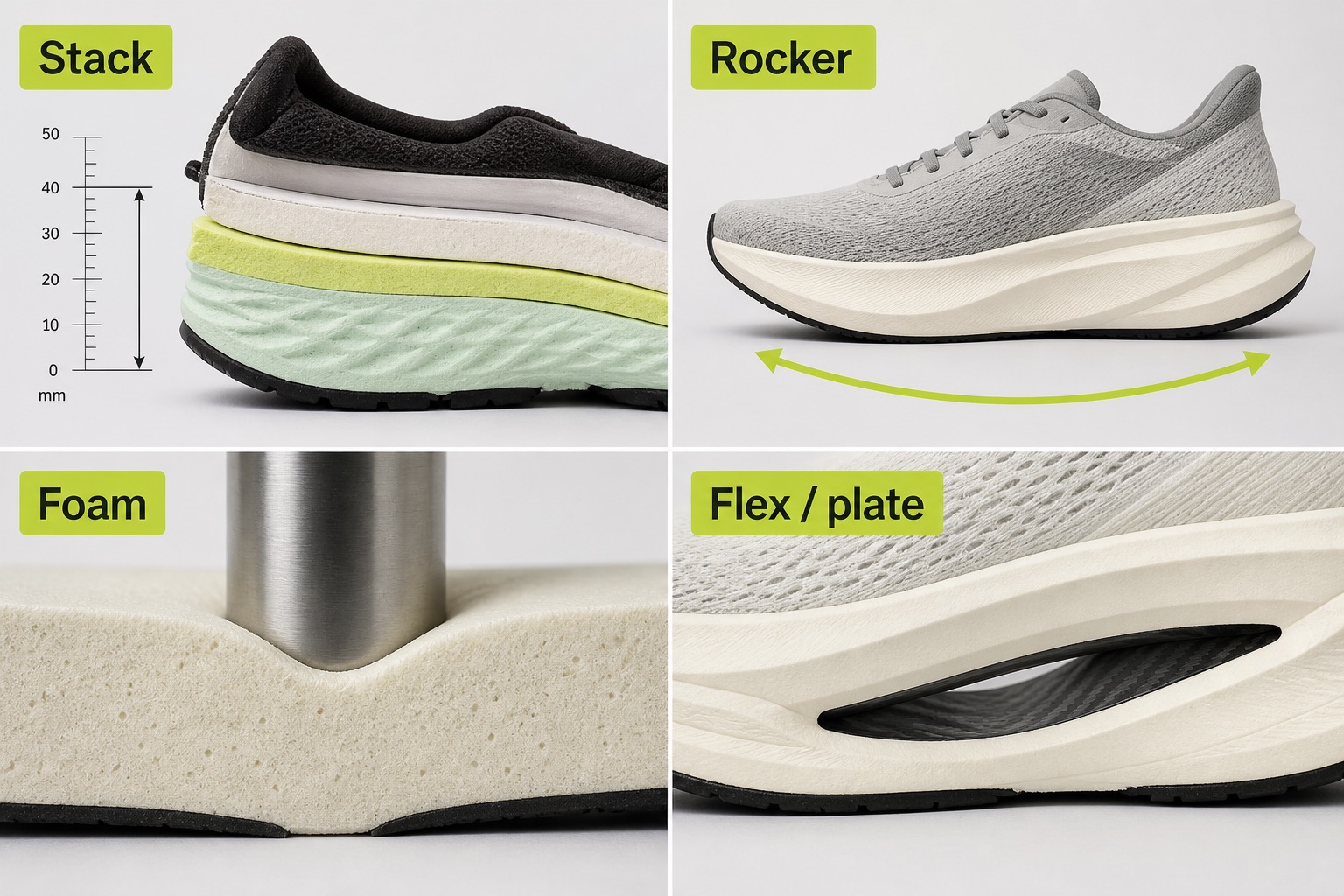
Cushioning
- What it is
- Kitletics’ controlled category for cushioning amount: minimal, low, medium, high or maximum.
- How it changes the choice
- Helps filter broad protection and stack intent across the catalog.
- What you may notice
- How much cushioning the shoe is built around—not exactly how soft it feels.
Cushion feel
- What it is
- The underfoot compression character, such as plush, soft, balanced or firm.
- How it changes the choice
- Separates the sensation of foam from the amount of material.
- What you may notice
- More sink, support or firmness under load.
Energy return
- What it is
- How readily the complete midsole system rebounds after compression.
- How it changes the choice
- Contributes to a relaxed, lively or highly responsive ride.
- What you may notice
- More or less rebound; it is not free energy or a guarantee of faster running.
Ride character
- What it is
- The overall transition label, such as smooth, rockered, responsive or protective.
- How it changes the choice
- Summarises how foam, geometry, stiffness and outsole work together.
- What you may notice
- The shoe’s dominant motion rather than one isolated material property.
6What to look for in each factor
Use these checks on fit, ride and job match — verify on a short shakeout, not only on a shelf comparison.
Look for
Cushioning
- Kitletics’ controlled category for cushioning amount: minimal, low, medium, high or maximum.
- Watch for: How much cushioning the shoe is built around—not exactly how soft it feels.
- Decision tip: Helps filter broad protection and stack intent across the catalog.
Look for
Cushion feel
- The underfoot compression character, such as plush, soft, balanced or firm.
- Watch for: More sink, support or firmness under load.
- Decision tip: Separates the sensation of foam from the amount of material.
Look for
Energy return
- How readily the complete midsole system rebounds after compression.
- Watch for: More or less rebound; it is not free energy or a guarantee of faster running.
- Decision tip: Contributes to a relaxed, lively or highly responsive ride.
Look for
Ride character
- The overall transition label, such as smooth, rockered, responsive or protective.
- Watch for: The shoe’s dominant motion rather than one isolated material property.
- Decision tip: Summarises how foam, geometry, stiffness and outsole work together.
7Support terms: neutral, stability and plates
Neutral
- What it is
- A platform with minimal dedicated guidance structures.
- How it changes the choice
- Usually allows a freer path through the shoe, although broad geometry can still feel planted.
- What you may notice
- Less deliberate guidance—not an inherently unstable shoe.
Stability
- What it is
- A design category using geometry, sidewalls, rails, posts or other structures for a more guided platform.
- How it changes the choice
- Can make the ride feel more controlled or secure.
- What you may notice
- Mild to obvious guidance, depending on the model—not a diagnosis or treatment.
Plate
- What it is
- A carbon, nylon or other stiffening structure embedded in the sole.
- How it changes the choice
- Works with foam and rocker to manage bending and transition.
- What you may notice
- Potentially more snap or rigidity; not every plate is built for racing.
Platform width
- What it is
- The width of the midsole footprint under the foot.
- How it changes the choice
- A broader base can make tall or soft foam feel more planted.
- What you may notice
- Geometric security, separate from whether the upper is sold in wide sizing.
8What to look for in each factor
Use these checks on fit, ride and job match — verify on a short shakeout, not only on a shelf comparison.
Look for
Neutral
- A platform with minimal dedicated guidance structures.
- Watch for: Less deliberate guidance—not an inherently unstable shoe.
- Decision tip: Usually allows a freer path through the shoe, although broad geometry can still feel planted.
Look for
Stability
- A design category using geometry, sidewalls, rails, posts or other structures for a more guided platform.
- Watch for: Mild to obvious guidance, depending on the model—not a diagnosis or treatment.
- Decision tip: Can make the ride feel more controlled or secure.
Look for
Plate
- A carbon, nylon or other stiffening structure embedded in the sole.
- Watch for: Potentially more snap or rigidity; not every plate is built for racing.
- Decision tip: Works with foam and rocker to manage bending and transition.
Look for
Platform width
- The width of the midsole footprint under the foot.
- Watch for: Geometric security, separate from whether the upper is sold in wide sizing.
- Decision tip: A broader base can make tall or soft foam feel more planted.
9Construction terms: midsole, outsole and upper
 Road
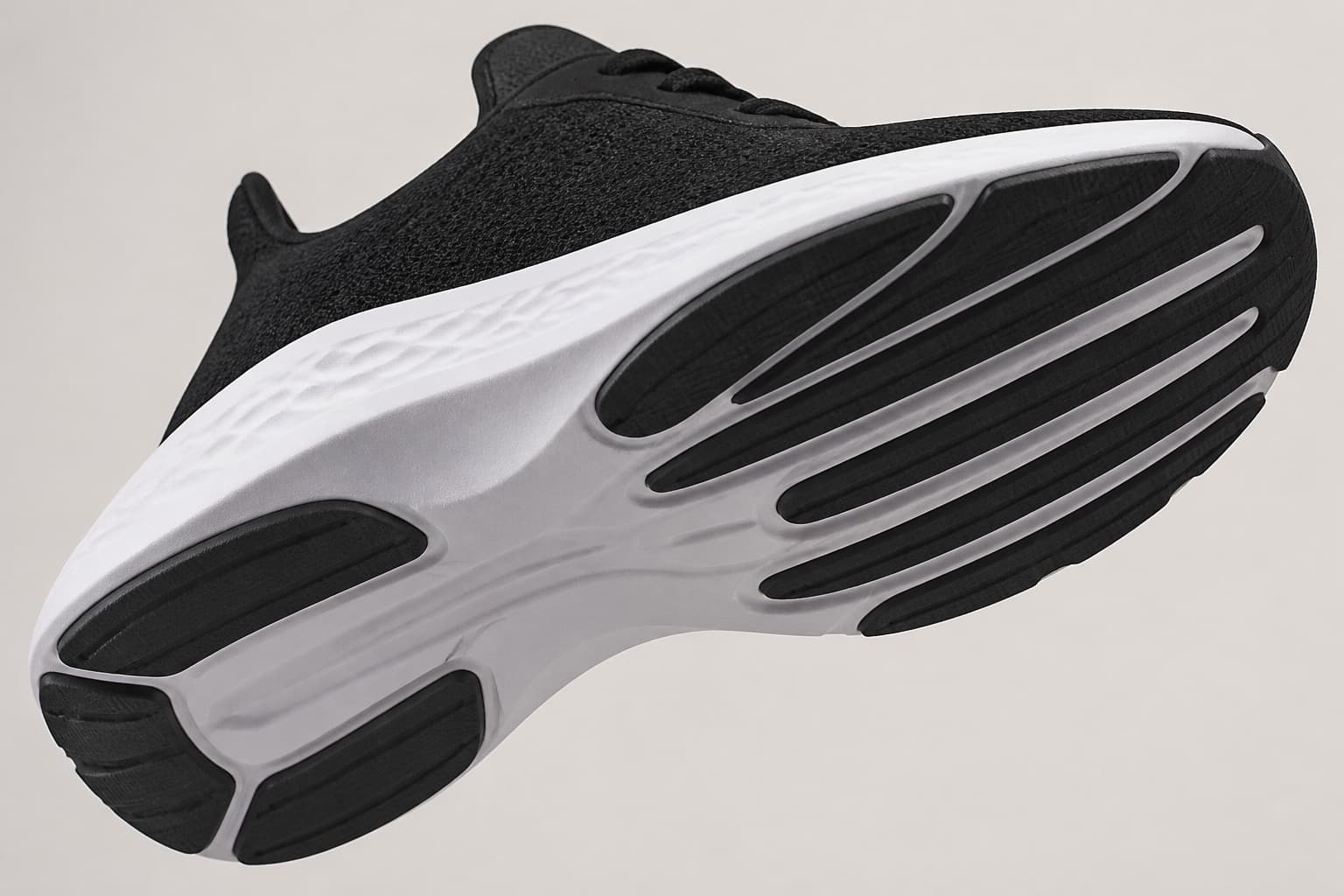
RoadFlatter tread and road rubber for pavement — lighter geometry, less aggressive grip.
 Trail
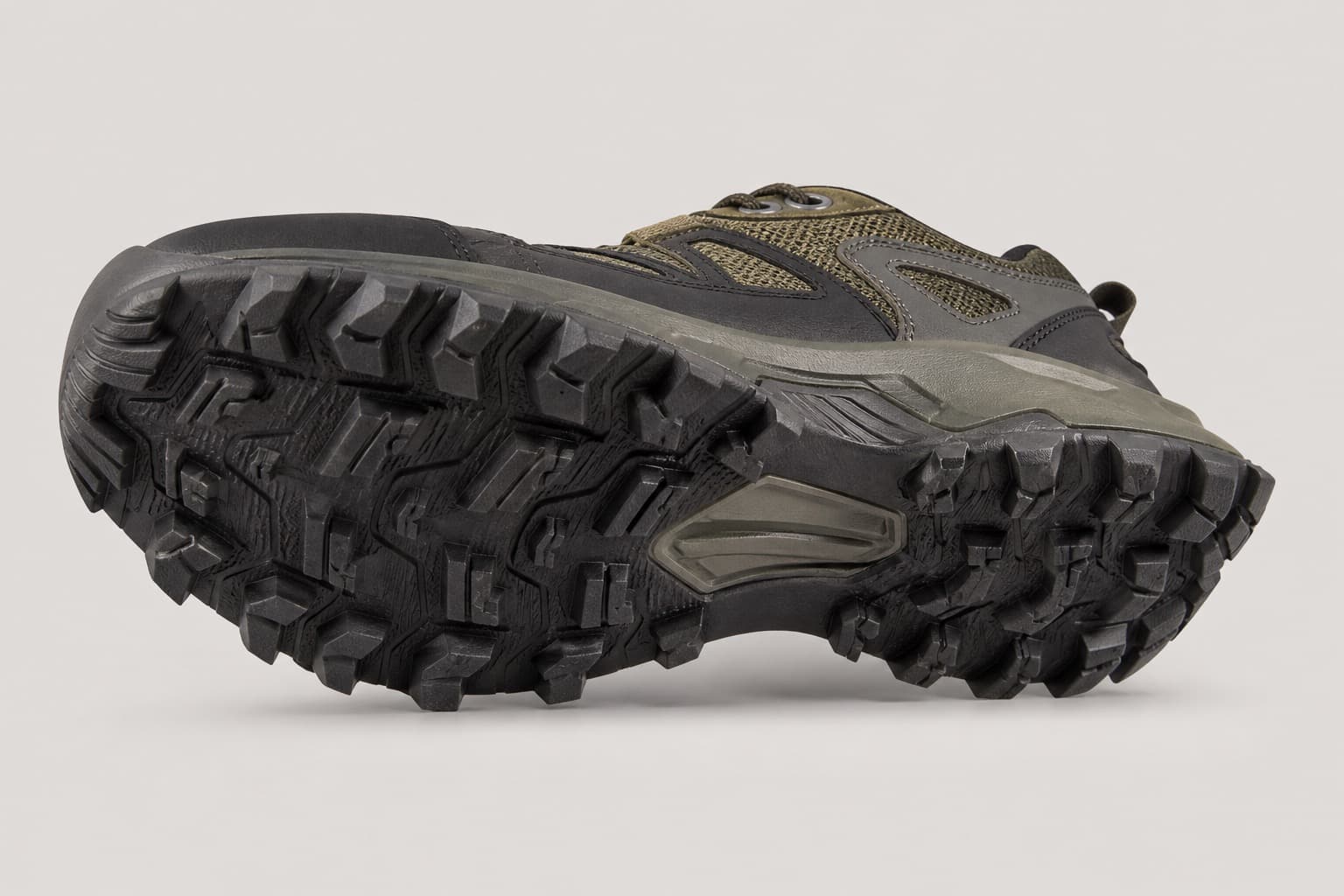
TrailDeeper multidirectional lugs and a more planted base for dirt, rock and uneven ground.
Midsole
- What it is
- The foam and structural system between footbed and outsole.
- How it changes the choice
- Provides most cushioning, rebound, guidance and underfoot geometry.
- What you may notice
- The core ride, although the plate and outsole can change it.
Outsole
- What it is
- The ground-contact layer, commonly rubber with road tread or trail lugs.
- How it changes the choice
- Controls grip, contributes durability and can add weight or stiffness.
- What you may notice
- Traction and confidence on the intended surface.
Upper
- What it is
- The mesh, knit, overlays, tongue and heel structure wrapping the foot.
- How it changes the choice
- Creates lockdown, volume, breathability and some protection.
- What you may notice
- Fit security, pressure points, ventilation and debris resistance.
Lugs
- What it is
- Raised outsole projections designed to bite into loose or uneven ground.
- How it changes the choice
- Improves trail traction while making road contact less smooth.
- What you may notice
- More grip off-road and more tread sensation on pavement.
10What to look for in each factor
Use these checks on fit, ride and job match — verify on a short shakeout, not only on a shelf comparison.
Look for
Midsole
- The foam and structural system between footbed and outsole.
- Watch for: The core ride, although the plate and outsole can change it.
- Decision tip: Provides most cushioning, rebound, guidance and underfoot geometry.
Look for
Outsole
- The ground-contact layer, commonly rubber with road tread or trail lugs.
- Watch for: Traction and confidence on the intended surface.
- Decision tip: Controls grip, contributes durability and can add weight or stiffness.
Look for
Upper
- The mesh, knit, overlays, tongue and heel structure wrapping the foot.
- Watch for: Fit security, pressure points, ventilation and debris resistance.
- Decision tip: Creates lockdown, volume, breathability and some protection.
Look for
Lugs
- Raised outsole projections designed to bite into loose or uneven ground.
- Watch for: More grip off-road and more tread sensation on pavement.
- Decision tip: Improves trail traction while making road contact less smooth.
11Fit language is not interchangeable
Last, width option, toe-box shape and upper volume describe different things. “Wide” may mean an official width SKU, a naturally roomy last, a broad forefoot, or simply a reviewer’s impression.
Check the offered width first, then read model-specific fit notes. A broad midsole platform does not guarantee a roomy upper, and an extra-wide upper does not tell you how broad the foam base is.
Allow practical toe room and secure the heel without excessive lace pressure. If fit changes your stride or creates persistent discomfort, the specification sheet cannot make that shoe the right choice.
12Translate terminology into a shortlist
- 1
Name the shoe’s job
Start with daily, easy, long, workout, race or trail use.
- 2
Choose the terrain
Outsole and upper needs change sharply between pavement and technical trail.
- 3
Set fit constraints
Confirm length, official widths, last shape and lockdown before chasing ride details.
- 4
Choose ride character
Combine cushion level, cushion feel, energy return and rocker.
- 5
Check geometry
Read heel stack, forefoot stack, drop, platform width and flexibility together.
- 6
Select guidance preference
Compare neutral, mild-stability and stability as product designs—not diagnoses.
- 7
Accept the compromise
More grip, stack, structure or rebound usually carries a cost in weight, flexibility, durability or price.
Which term matters first?
Fit problem
Start with last, width options, upper volume and heel lockdown.
Ride preference
Start with cushion feel, energy return, rocker and flexibility.
Terrain need
Start with outsole, grip, lugs, upper protection and stack protection.
Support preference
Compare stability classification, platform width and guidance approach.
13Which terms matter most by use
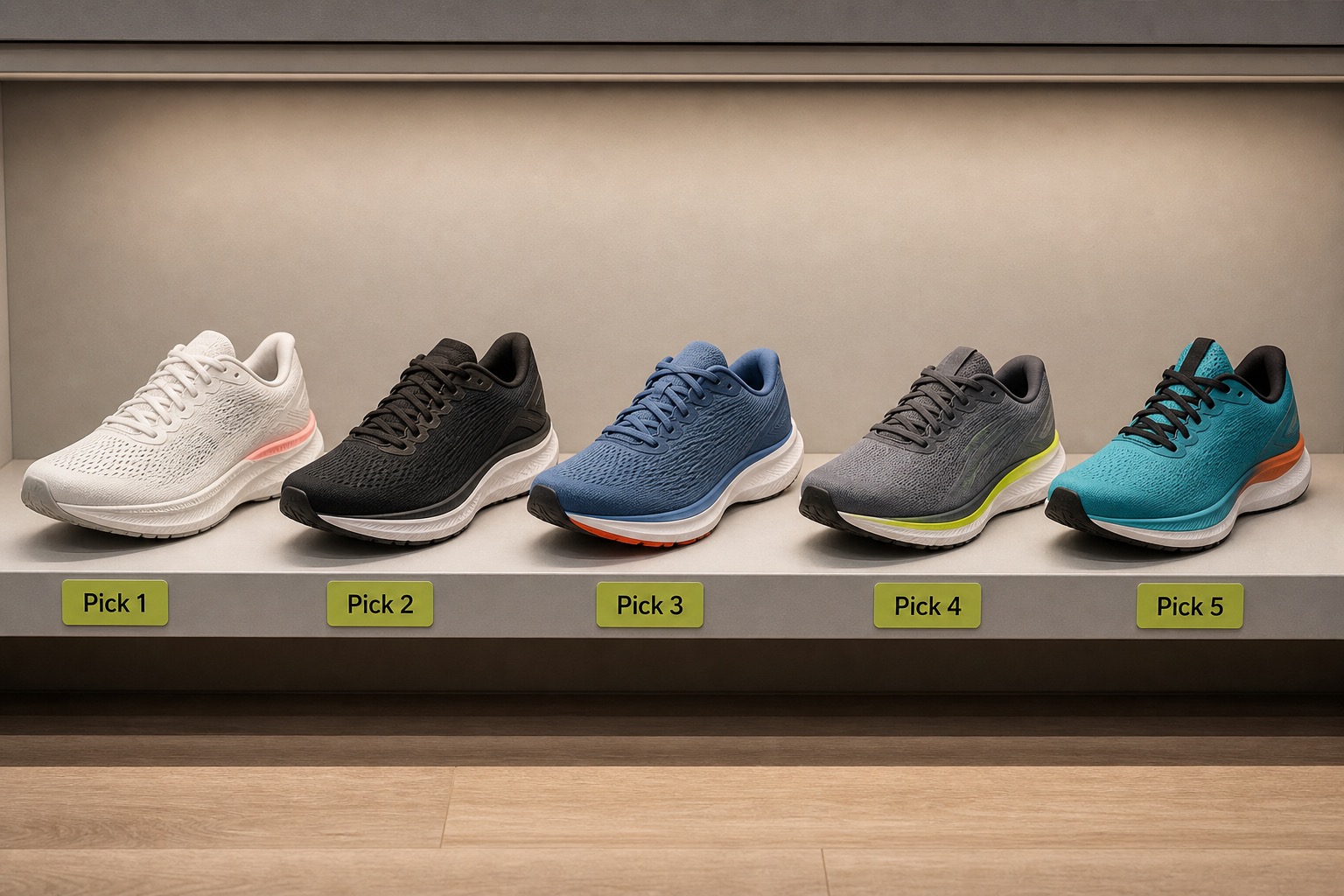
- 1
Daily training
Fit, outsole durability, cushion feel and versatility usually matter more than one headline technology.
Explore → - 2
Easy / recovery
Cushion level, feel, platform width and relaxed transitions are useful comparison points.
- 3
Tempo / intervals
Weight, energy return, rocker, flexibility and plate construction become more relevant.
Explore → - 4
Road racing
Race fit, premium foam, plate, stack legality and tested pace comfort matter.
Explore → - 5
Trail running
Outsole compound, lugs, upper security, protection and terrain suitability lead the decision.
Explore →
14Four products, four terminology profiles
These examples show how terms combine; they are not ranked recommendations. Product specifications render from current catalog data.
High-cushion, high-return neutral daily
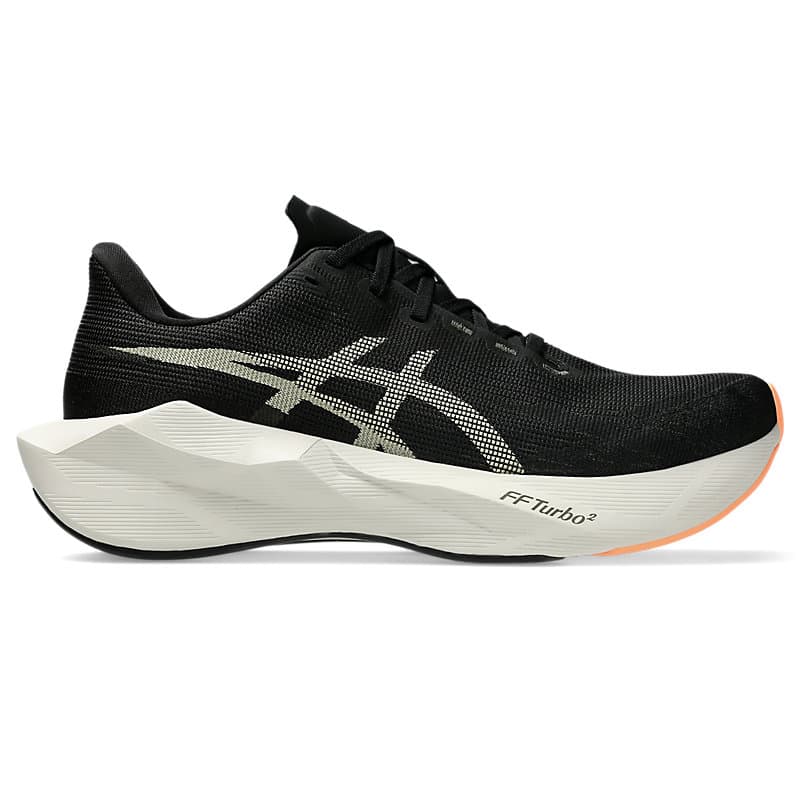
9.0 Kitletics Score
ASICS Novablast 6
Why it illustrates the category: Its 8 mm drop, soft high cushioning, high energy return, rockered ride and unplated neutral platform show why one word cannot describe a shoe.
Best for
- · Mixed daily mileage
- · Long runs
- · Runners wanting soft plus lively
Trade-off
Tall, soft geometry may feel less direct than a lower or firmer trainer.
Read review →From € 149Smooth neutral daily with broad widths
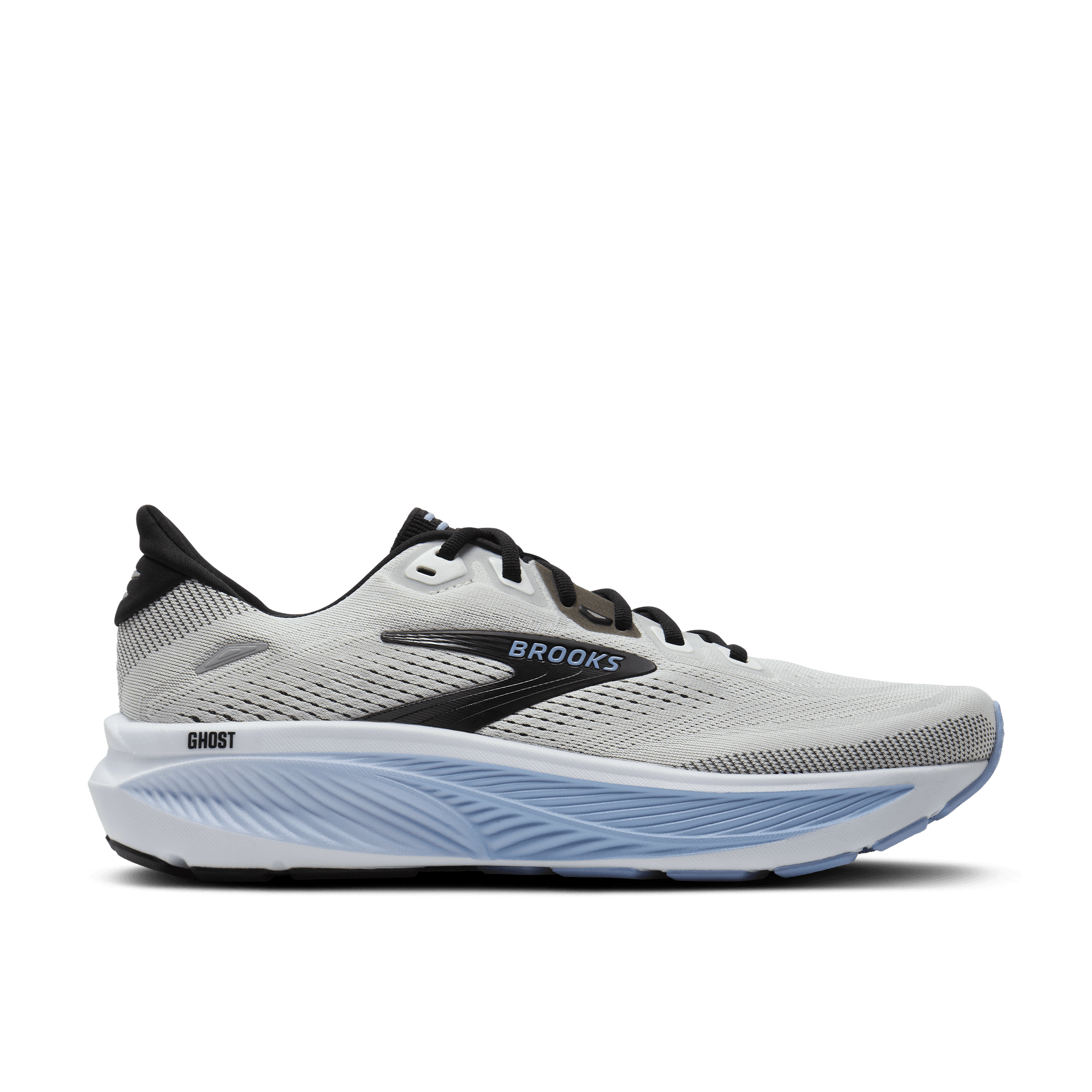
8.6 Kitletics Score
Brooks Ghost 18
Why it illustrates the category: A 12 mm drop, soft high cushioning, moderate energy return and extensive width ladder make fit and conventional daily comfort the leading terms.
Best for
- · Daily road running
- · Beginners
- · Narrow through extra-wide sizing needs
Trade-off
Less energetic and specialised than performance-focused options.
Read review →From € 144Protective aggressive-grip trail shoe
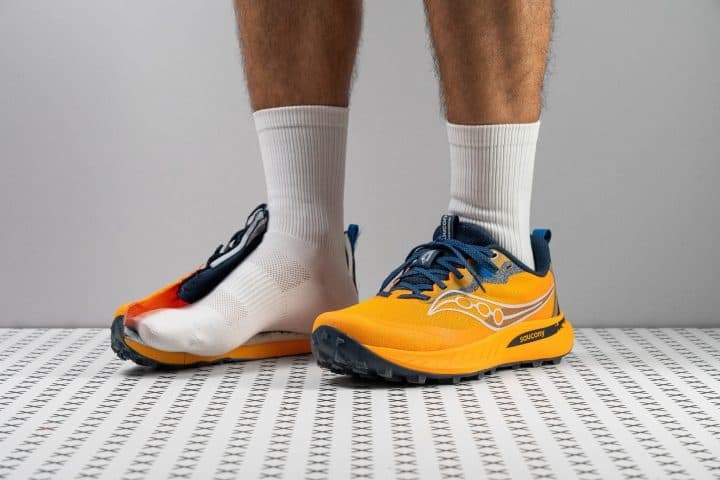
8.3 Kitletics Score
Saucony Peregrine 15
Why it illustrates the category: Medium balanced cushioning, 4 mm drop, reinforced upper and aggressive PWRTRAC outsole shift the vocabulary from road smoothness to grip and protection.
Best for
- · Technical singletrack
- · Muddy conditions
- · Runners wanting trail feel
Trade-off
Aggressive tread can feel firm and awkward on long paved connectors.
Read review →From € 150Carbon-plated race system
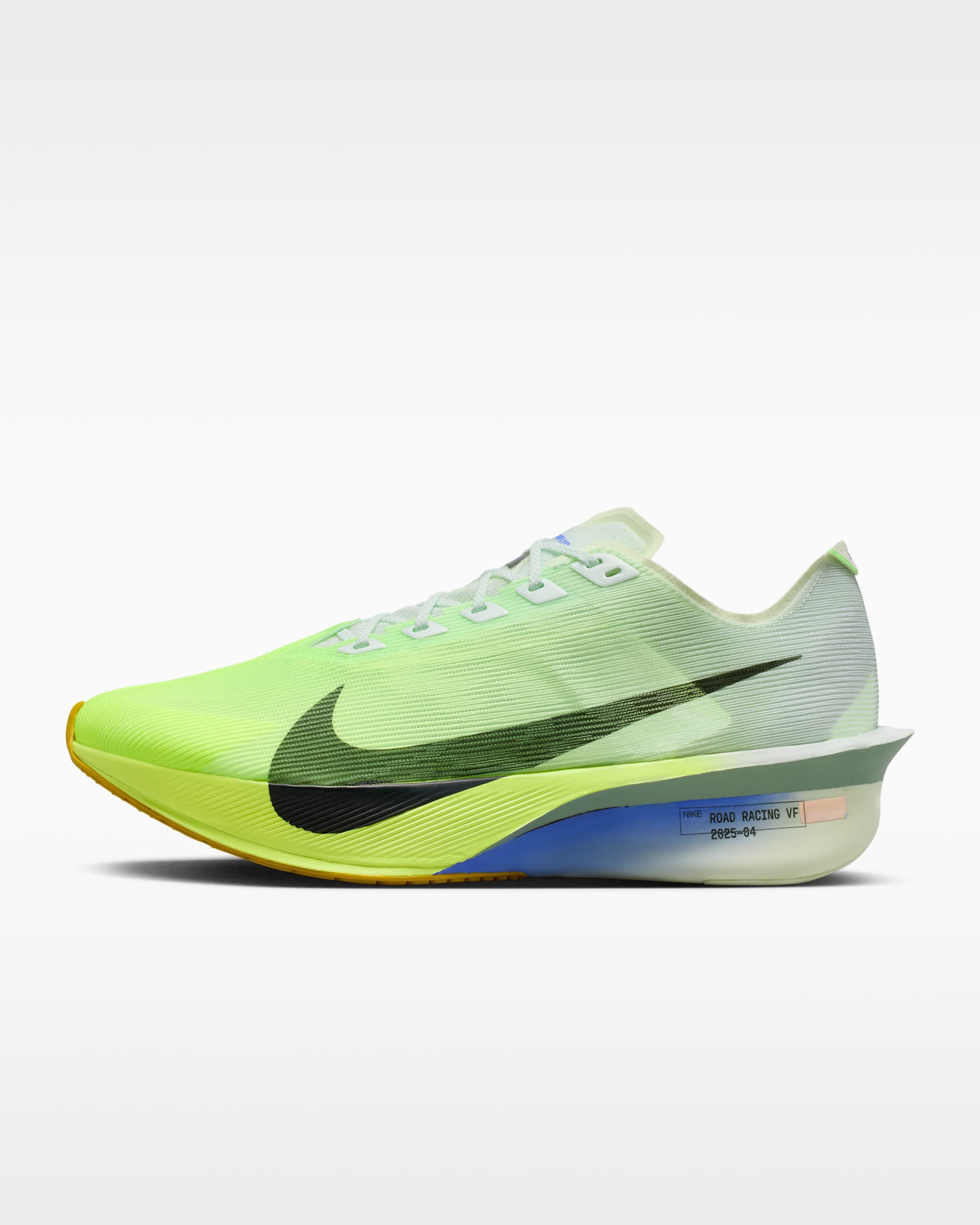
8.9 Kitletics Score
Nike Vaporfly 4
Why it illustrates the category: High cushioning, firm feel, very-high energy return and a carbon plate demonstrate that responsive race cushioning is not the same as plush daily cushioning.
Best for
- · Road racing
- · Race-specific workouts
- · Runners comfortable with stiff geometry
Trade-off
Specialised fit, feel, durability and price make it a poor default daily shoe.
Read review →From € 245
15Compare terminology in real products
| Product | Support approach | Cushion | Drop | Widths | Best use | Key trade-off |
|---|---|---|---|---|---|---|
ASICS Novablast 6 neutral | FF BLAST MAX + FF TURBO SQUARED trampoline pod | high | 8 mm | standard, wide | Soft, lively neutral daily | Not a stability shoe |
Brooks Ghost 18 neutral | DNA LOFT v3 | high | 12 mm | narrow, standard, wide, extra-wide | Smooth, broad-width daily | Higher drop |
Saucony Peregrine 15 mild-stability | PWRRUN | medium | 4 mm | standard, wide | Aggressive-grip trail | Not ideal on long road connectors |
Nike Vaporfly 4 neutral | ZoomX | high | 8 mm | standard | Carbon-plated race | Not for easy mileage |
16Common terminology misconceptions
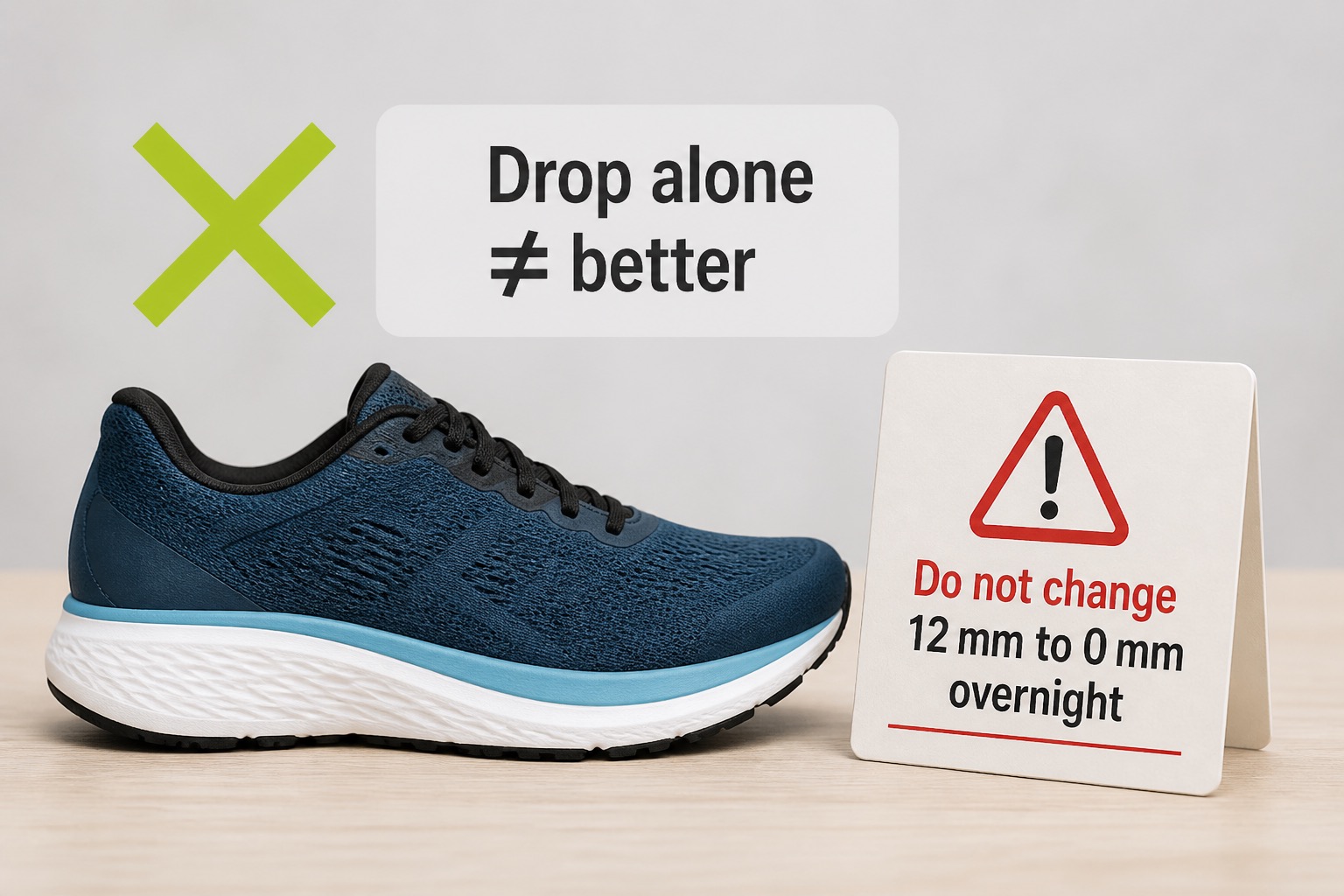
High stack means soft
Stack is height. Foam, geometry and stiffness determine how the platform compresses.
One drop is healthiest
Drop is geometry, not a universal prescription. Comfort, adaptation and the complete shoe matter.
Neutral means unstable
A neutral shoe can use a broad, planted platform without dedicated guidance structures.
Every plate makes you faster
Plate material and purpose vary; performance comes from the whole foam-geometry system and the runner.
Energy return creates free energy
The term describes rebound behaviour, not energy generation or a guaranteed performance gain.
Wide platform means wide fit
Midsole footprint and upper width are separate. Check both.
More outsole is always better
Aggressive lugs improve loose-ground traction but can add weight and feel awkward on pavement.
17Frequently asked questions
- What does stack height mean?
- Stack height is the amount of midsole material under the heel and/or forefoot. It is related to, but not the same as, how soft the shoe feels.
- What is a rocker in a running shoe?
- A rocker is curved geometry that encourages a rolling forward transition. It can make tall stacks feel smoother, especially late in long runs.
- What does neutral mean for running shoes?
- Neutral usually means the shoe has minimal dedicated guidance structures. It does not diagnose your gait or guarantee injury outcomes.
- Where should I look up running shoe terms?
- Use this terminology guide alongside Product pages — Kitletics maps terms to structured fields (drop, cushioning, stability) so Finders and comparisons stay consistent.
- What is shoe drop?
- Drop is the height difference between heel and forefoot stack, measured in millimetres. It influences how the shoe encourages landing mechanics — it is not a quality ranking.
- Is a higher stack always softer?
- No. Stack height measures material underfoot; softness depends on foam and geometry. Kitletics separates cushioning, cushion feel and energy return on Product specs.
Examples with different terminology profiles
Browse running shoes →ASICS
Novablast 6
Soft, lively neutral daily
9.0 ExcellentFrom € 149
View review →Brooks
Ghost 18
Smooth, broad-width daily
8.6 Very GoodFrom € 144
View review →Saucony
Peregrine 15
Aggressive-grip trail
8.3 GoodFrom € 150
View review →Nike
Vaporfly 4
Carbon-plated race
8.9 Very GoodFrom € 245
View review →
Head-to-head comparisons
Continue the decision with focused head-to-heads — who should choose which, and the trade-offs that matter.
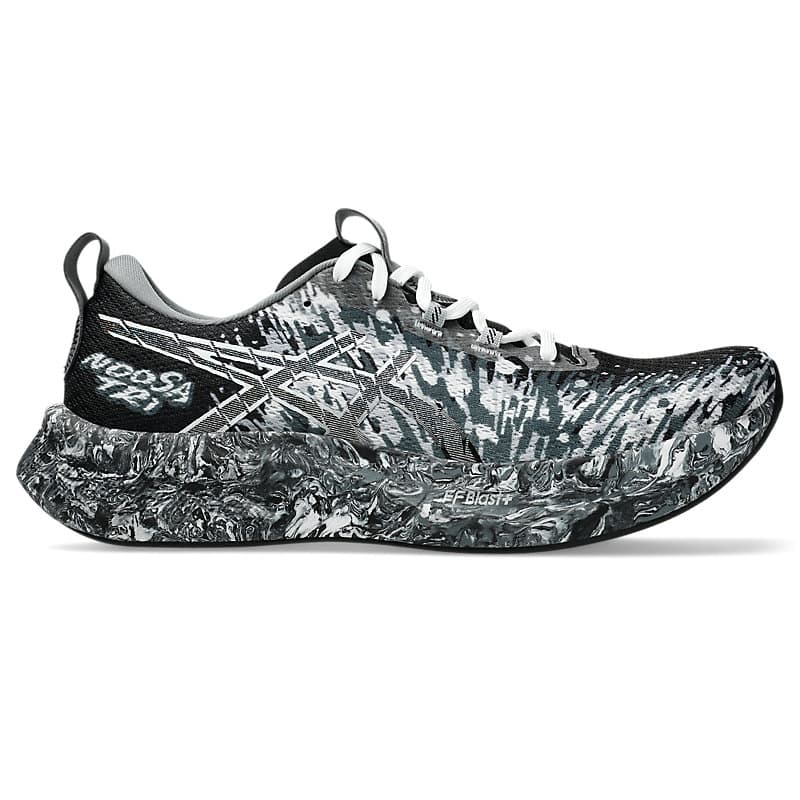
Novablast 6vsGEL-Nimbus 27
Two premium daily trainers with different strengths — energetic versatility versus maximum cushioning.
Compare →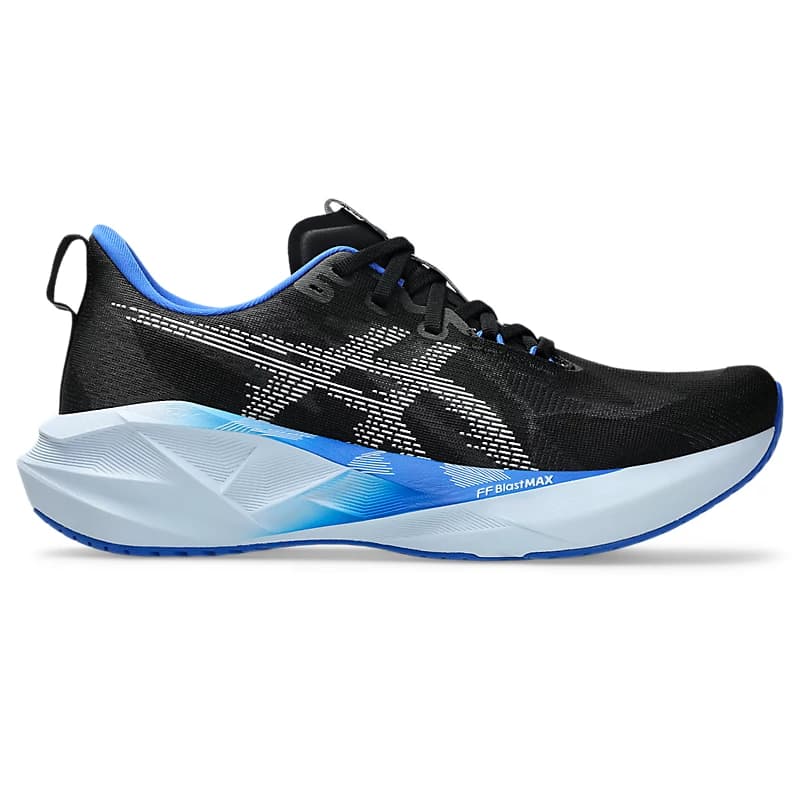
Novablast 6vsNovablast 5
Current vs previous Novablast — grip, midsole pod and upper changes.
Compare →Novablast 6vsGhost 18
Bouncy ASICS daily vs soft, width-friendly Brooks daily.
Compare →How we research
Definitions align with controlled Kitletics catalog fields and common industry usage, while separating measurable geometry from subjective ride labels and unstandardised marketing language. Product examples and comparison data render from the current catalog.