The short version
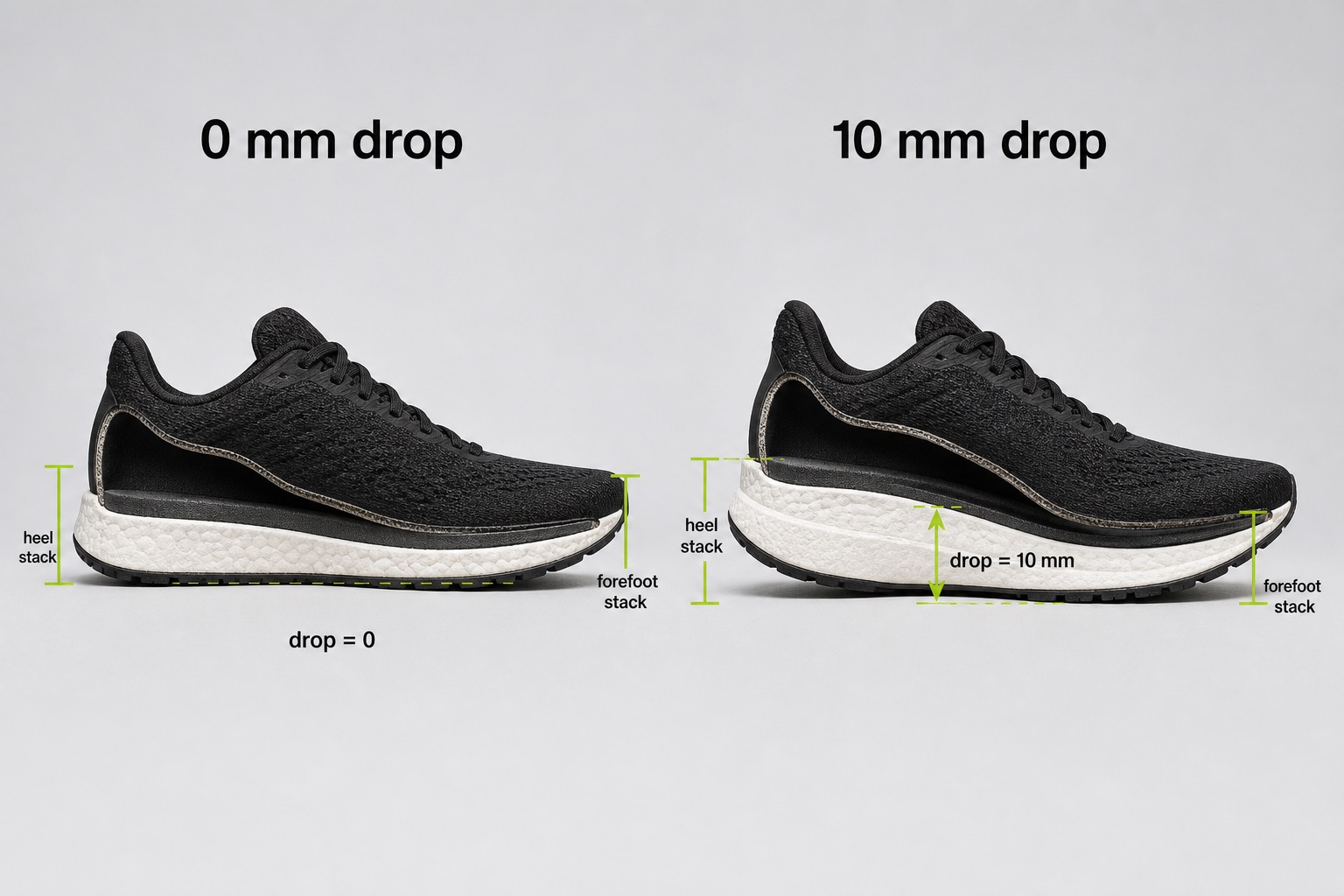
- Drop is heel stack minus forefoot stack, measured in millimetres.
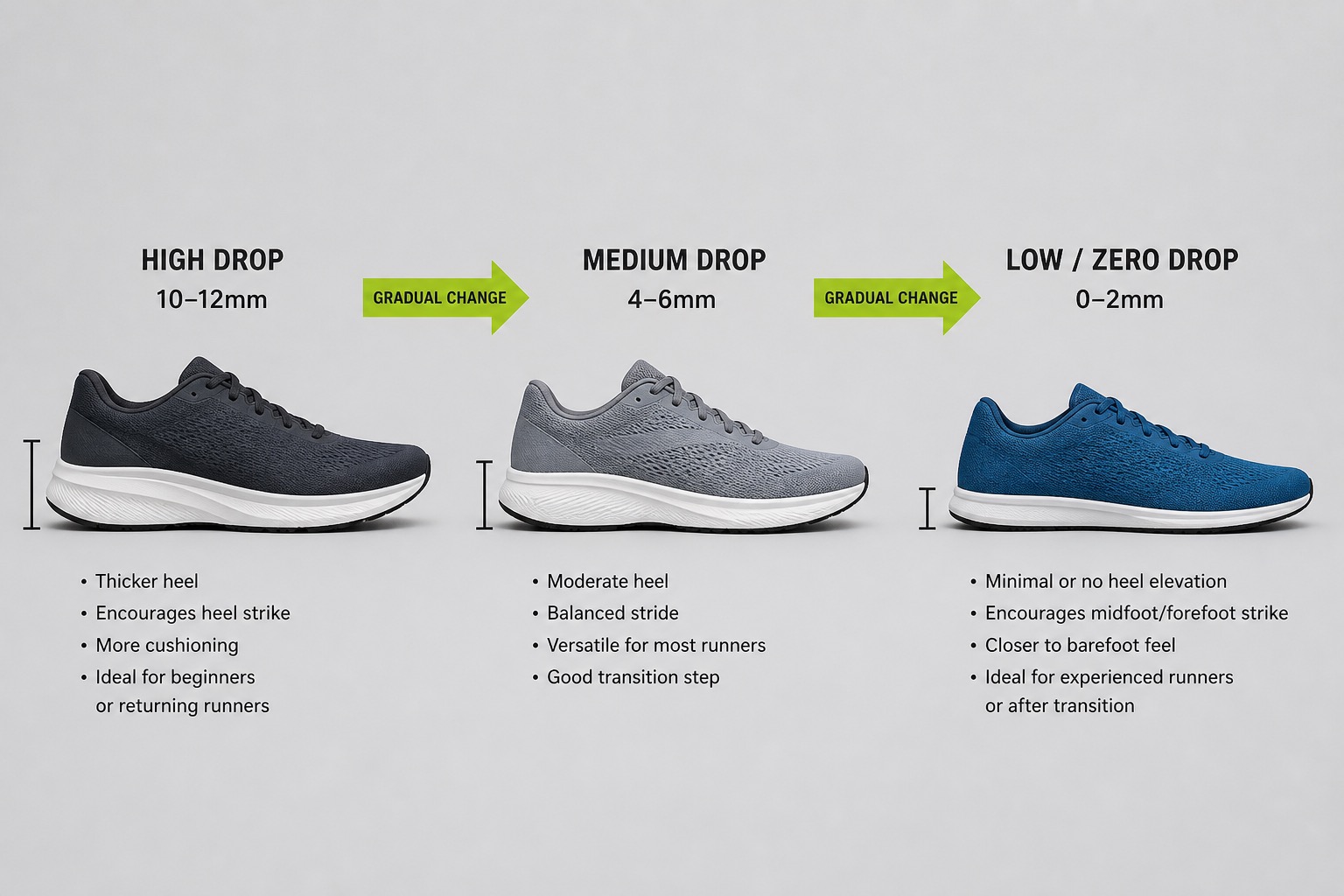
- Kitletics groups drop as zero (0 mm), low (1–5 mm), medium (6–9 mm) and high (10 mm+).
- Zero drop does not mean minimal cushioning; stack and drop are separate.
- Rocker, foam compression and stiffness can matter as much as the listed offset.
- Lower is not inherently better, faster, safer or more natural.
- Introduce large drop changes gradually and keep pain questions with a qualified clinician.
Kitletics explains shoe geometry and ride. We do not diagnose injury, prescribe a heel-to-toe drop, or claim that a drop prevents or treats pain. Seek qualified clinical guidance for persistent symptoms.
Approaches in this guide
1What is running shoe drop?
Drop is a measurement, not a quality rating.
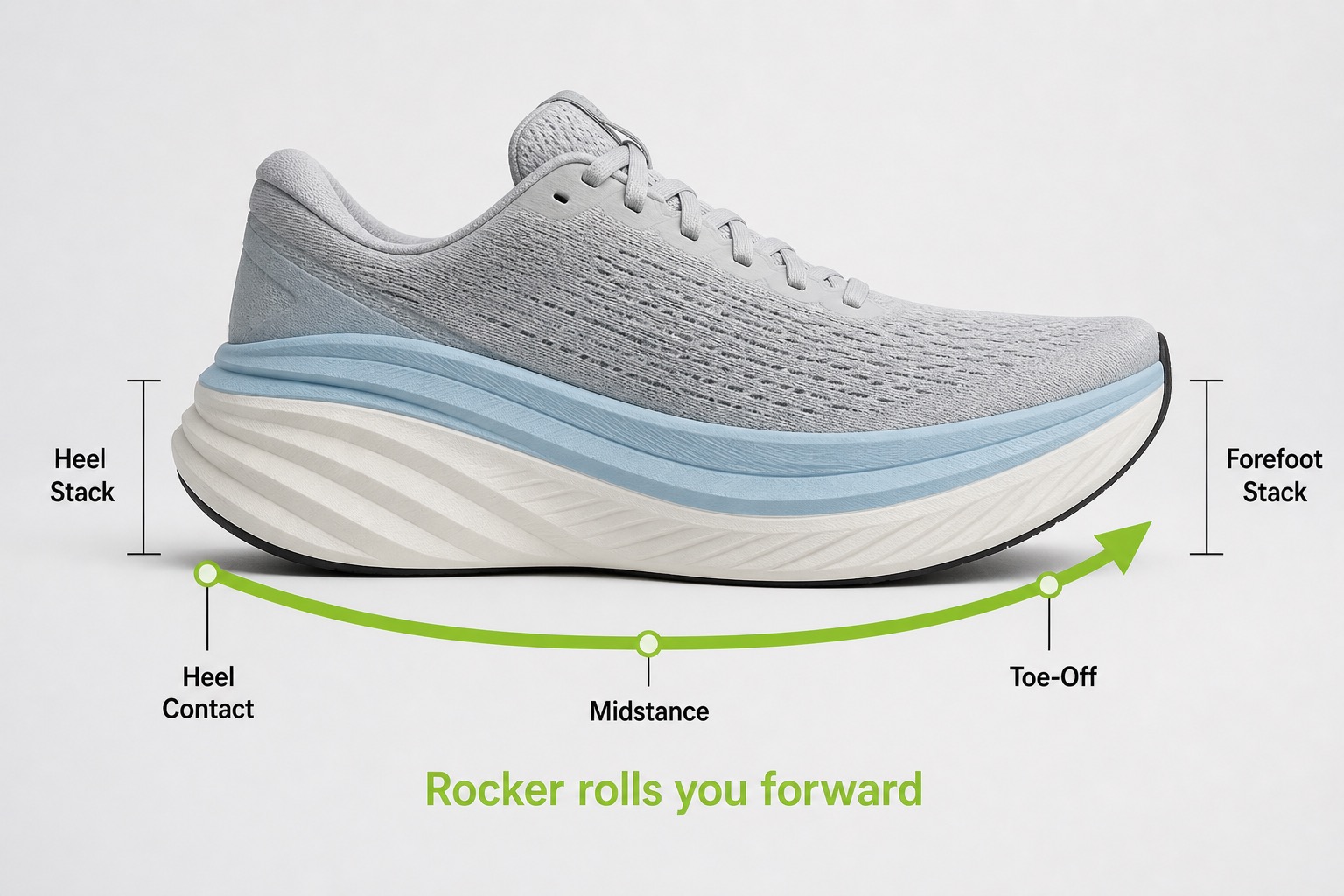
Heel-to-toe drop is the difference between a shoe’s heel stack and forefoot stack, measured in millimetres. A shoe with 36 mm under the heel and 28 mm under the forefoot has an 8 mm drop. A zero-drop shoe has equal listed heights at both points; it can still have a thick midsole.
Drop describes the platform’s static geometry. It does not tell you how soft the foam is, how high the total stack is, how strongly the rocker rolls, or where your foot will strike. Two 8 mm shoes can feel unrelated once those other variables enter the picture.
Published figures are useful for comparison, but they are not laboratory-perfect promises. Brands may use different sample sizes and measurement conventions, and soft foam compresses while running. Treat a one-millimetre difference as minor; treat a move from 12 mm to 0 mm as meaningful.
2Kitletics drop buckets
These ranges organise the catalog; they do not prescribe what you should wear.
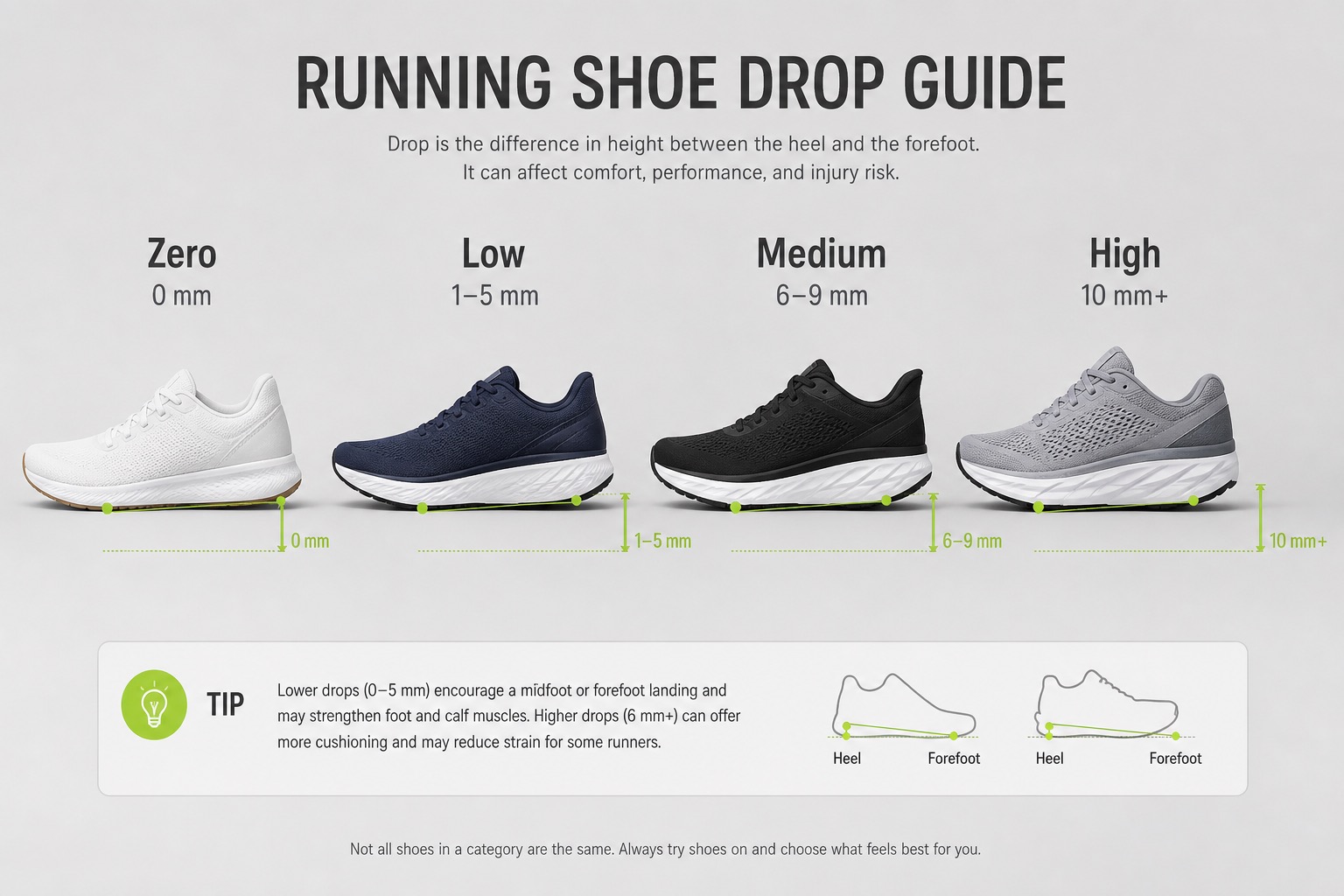
| Approximate range | Typical geometry signal | What to remember | |
|---|---|---|---|
| Zero | 0 mm | Heel and forefoot at equal listed height | Zero drop does not mean minimal cushioning |
| Low | 1–5 mm | Smaller heel-to-forefoot offset | Stack and rocker can still make the ride feel protective |
| Medium | 6–9 mm | Moderate offset common across daily and faster shoes | A broad middle, not a universal default |
| High | 10 mm+ | More listed foam height at the heel than forefoot | High drop does not automatically mean bulky or slow |
Kitletics buckets simplify filtering. Always compare the actual millimetre value and the complete shoe geometry.
Look for
Approximate range
- Zero: 0 mm
- Low: 1–5 mm
- Medium: 6–9 mm
- High: 10 mm+
Look for
Typical geometry signal
- Zero: Heel and forefoot at equal listed height
- Low: Smaller heel-to-forefoot offset
- Medium: Moderate offset common across daily and faster shoes
- High: More listed foam height at the heel than forefoot
3How drop can change the feel
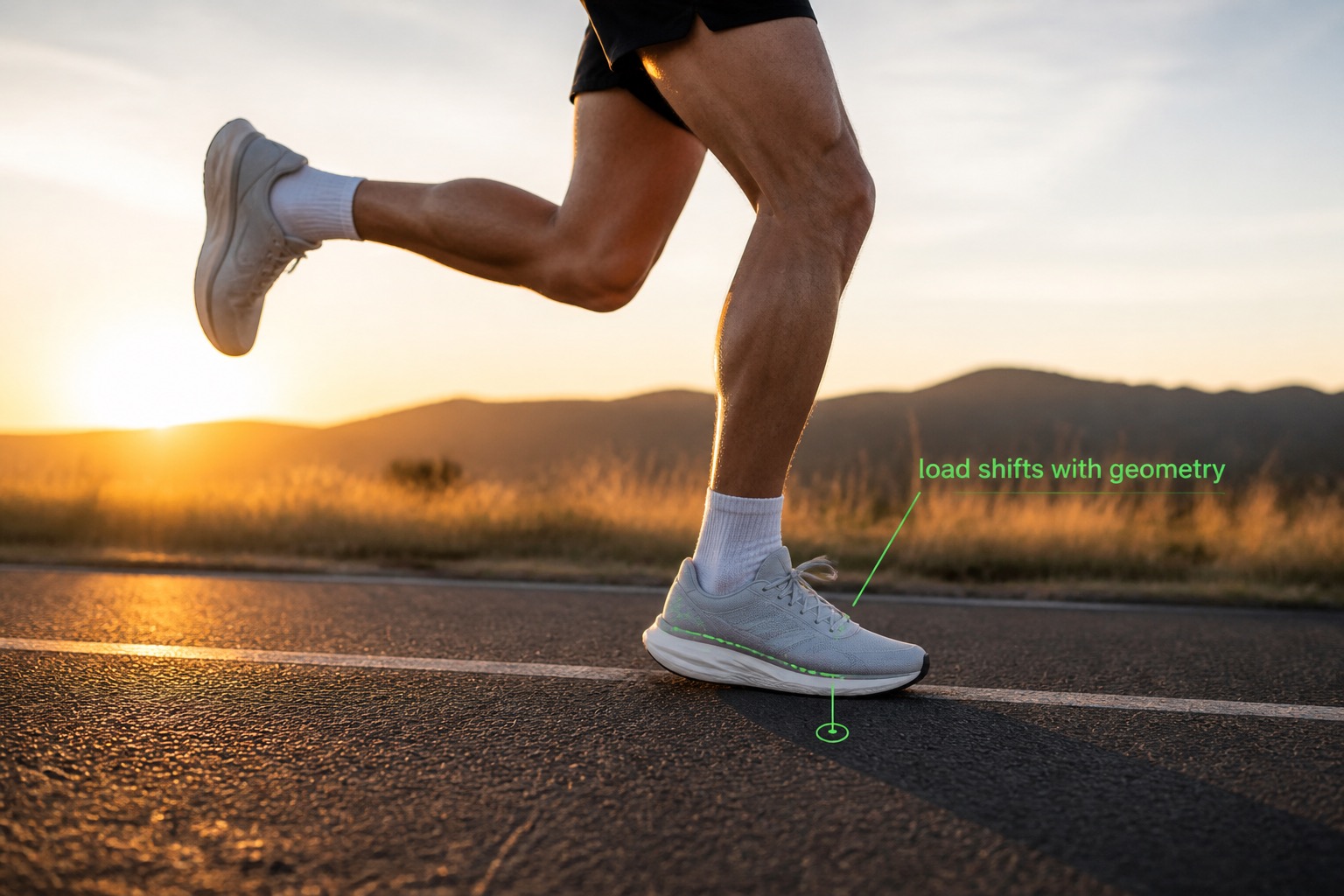
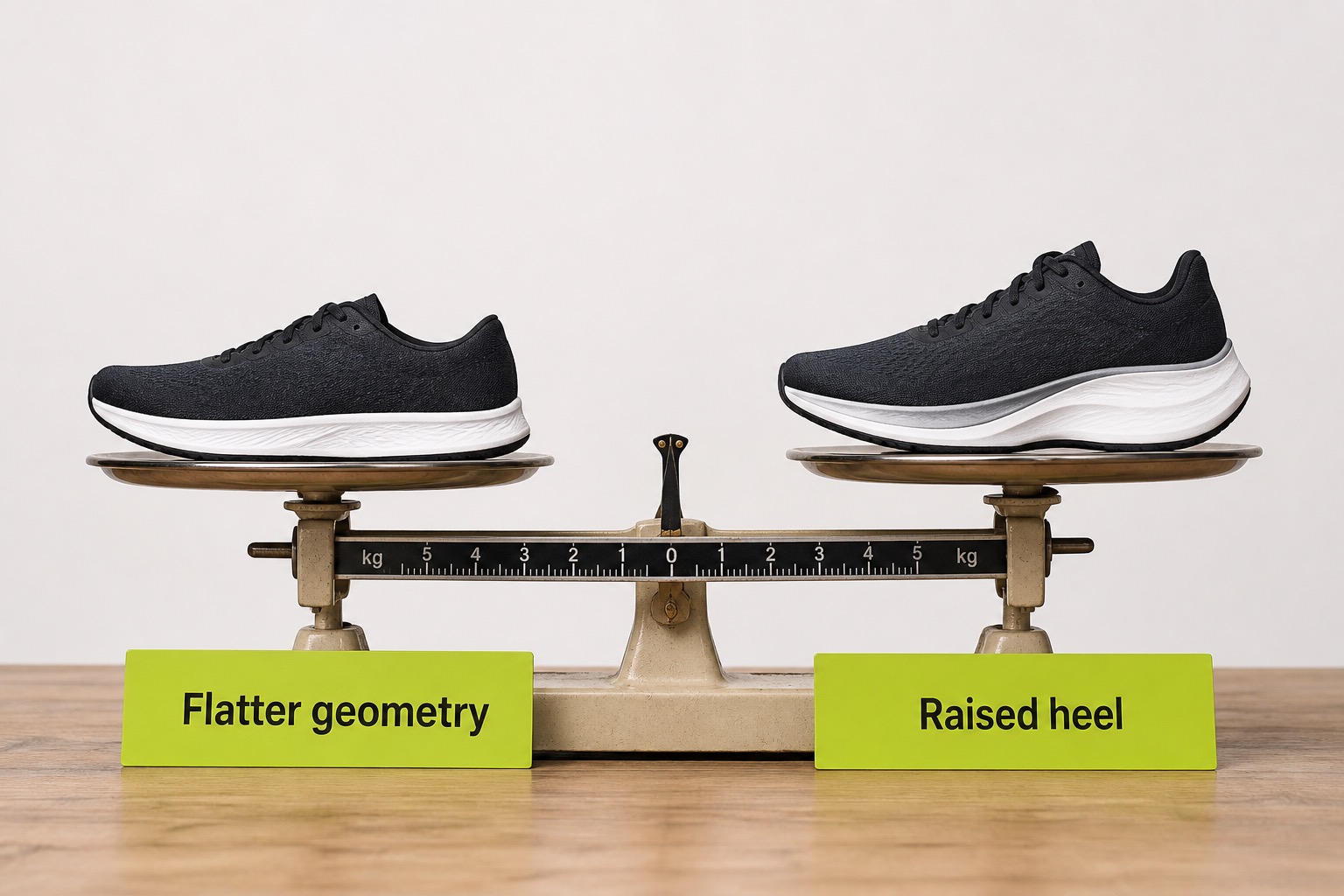
All else equal, a higher offset places the heel higher relative to the forefoot. A lower offset creates a flatter relationship underfoot. That geometry can change where you notice load and how the shoe feels through stance, but runners do not respond identically.
Higher-drop shoes may feel familiar to runners with a history in traditional daily trainers. Lower-drop shoes may feel flatter, more connected, or more forefoot-present. Those are tendencies, not guarantees: rocker, stiffness and foam can dominate the sensation.
Drop also does not dictate foot strike. Heel strikers can run in low-drop shoes, and forefoot strikers can run in high-drop shoes. Choose from the complete ride and your proven comfort, not a rule about how a runner is supposed to land.
4What changes the meaning of drop
Read drop beside these specifications and design choices.
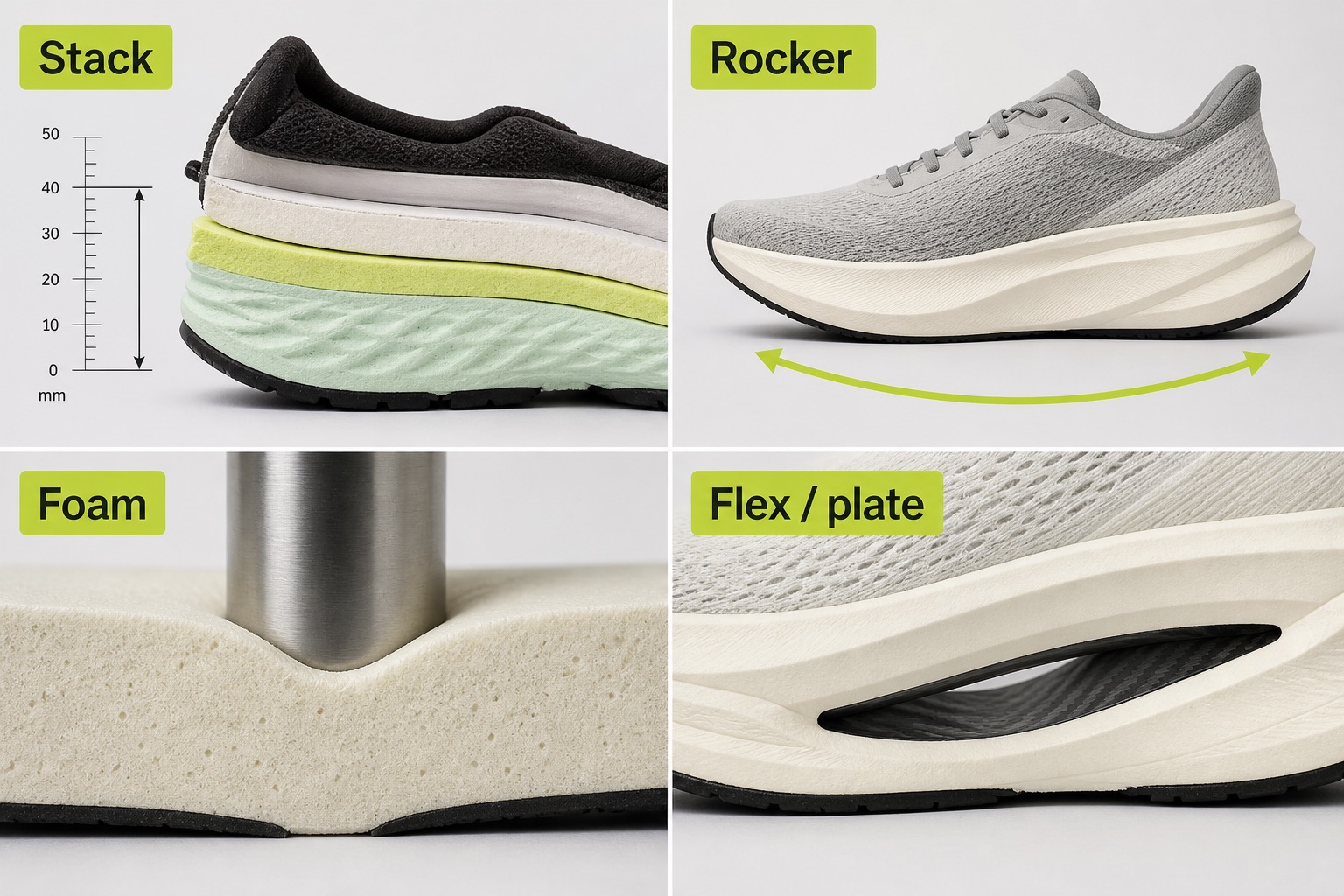
Total stack
- What it is
- The amount of material under heel and forefoot.
- How it changes the choice
- The same offset can sit on a low, flexible platform or a tall, protective one.
- What you may notice
- Ground feel and protection may differ even when drop matches.
Rocker geometry
- What it is
- Curvature that helps the shoe roll through transition.
- How it changes the choice
- A strong rocker can make the static heel-to-toe offset less obvious in motion.
- What you may notice
- A rolling sensation instead of a distinctly raised heel.
Foam compression
- What it is
- How the midsole deforms under your weight and stride.
- How it changes the choice
- Heel and forefoot can compress differently, changing the dynamic feel.
- What you may notice
- Softness may matter more than the listed millimetres.
Flex and plates
- What it is
- How freely the platform bends, including plate effects.
- How it changes the choice
- A stiff shoe redirects motion through its rocker rather than flexing naturally.
- What you may notice
- Two equal-drop shoes can transition at very different speeds.
Pace and session
- What it is
- The speed and duration at which you use the shoe.
- How it changes the choice
- Geometry can feel different at easy pace than at race pace.
- What you may notice
- A drop you enjoy for daily miles may not be your preferred race setup.
5What to look for in each factor
Use these checks on fit, ride and job match — verify on a short shakeout, not only on a shelf comparison.
Look for
Total stack
- The amount of material under heel and forefoot.
- Watch for: Ground feel and protection may differ even when drop matches.
- Decision tip: The same offset can sit on a low, flexible platform or a tall, protective one.
Look for
Rocker geometry
- Curvature that helps the shoe roll through transition.
- Watch for: A rolling sensation instead of a distinctly raised heel.
- Decision tip: A strong rocker can make the static heel-to-toe offset less obvious in motion.
Look for
Foam compression
- How the midsole deforms under your weight and stride.
- Watch for: Softness may matter more than the listed millimetres.
- Decision tip: Heel and forefoot can compress differently, changing the dynamic feel.
Look for
Flex and plates
- How freely the platform bends, including plate effects.
- Watch for: Two equal-drop shoes can transition at very different speeds.
- Decision tip: A stiff shoe redirects motion through its rocker rather than flexing naturally.
6Drop, stack and rocker work as a system
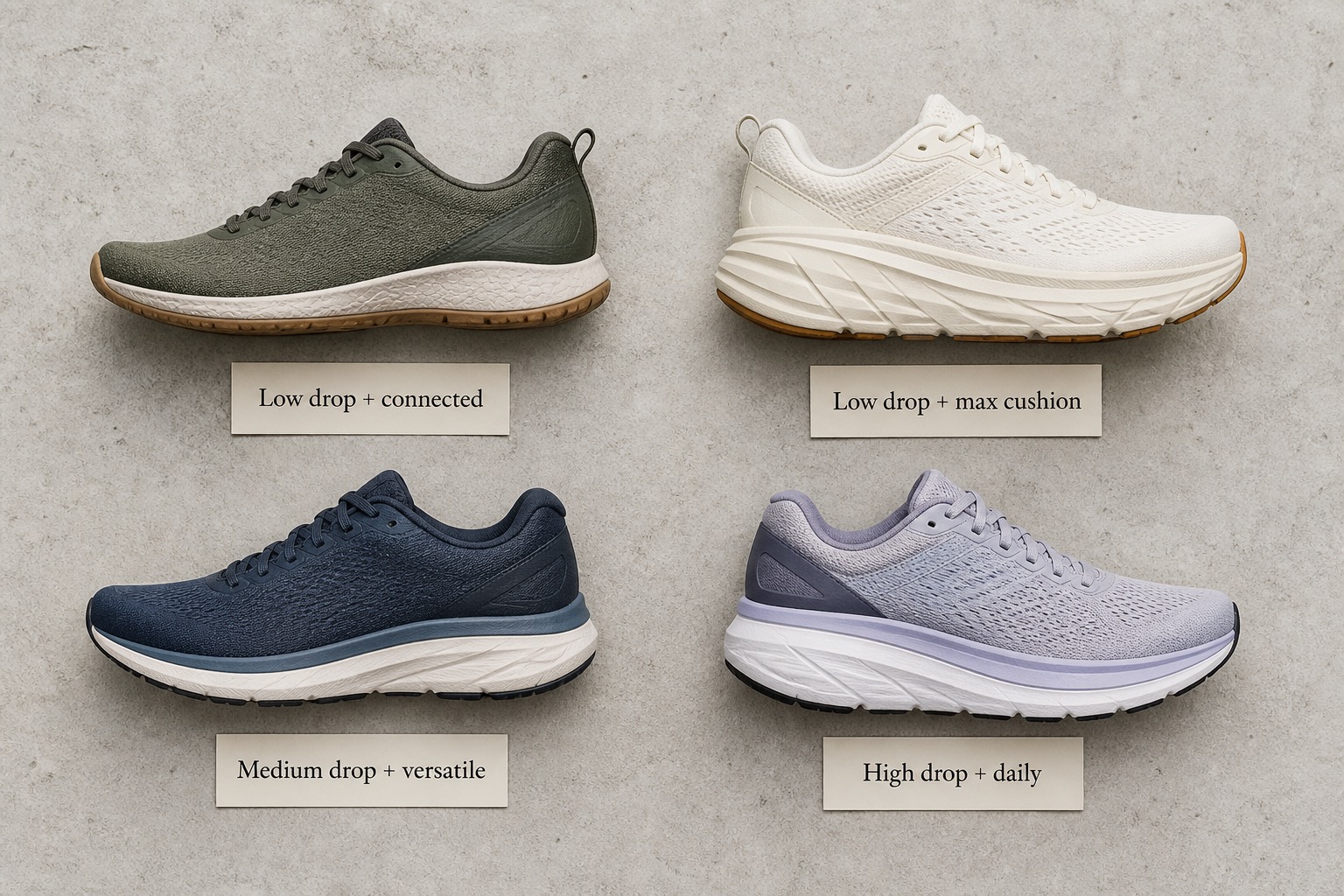
Imagine a 5 mm flexible shoe with modest stack and a 5 mm max-cushion shoe with a pronounced rocker. Their arithmetic matches, but the first may feel flatter and more connected while the second feels tall and rolling.
The reverse is also true. A high-drop shoe with a smooth heel bevel can transition less abruptly than its number suggests. Static measurements help shortlist shoes; ride geometry explains why the shortlist still needs context.
When comparing products, read four fields together: heel-to-toe drop, heel and forefoot stack where available, ride character, and flexibility or plate construction.
7Drop × ride geometry (catalog examples)
More rockered / shaped ↑ · Lower drop → Higher drop
Escalante 4
0 mm · flexible, lower-cushion daily platform
View product →Clifton 10
5 mm · max-cushion rockered platform
View product →Novablast 6
8 mm · high-cushion rockered daily trainer
View product →Ghost 18
12 mm · smooth traditional daily geometry
View product →
Placement is illustrative and uses catalog drop, ride character, flexibility and cushioning fields.
8What lower and higher drop may change
What you may gain
- · Lower drop can provide a flatter, more connected platform feel
- · Higher drop can feel familiar to runners accustomed to traditional trainers
- · A range of drops can give a rotation distinct ride options
- · The right offset can make a shoe’s transition feel natural to you
What you may give up
- · Lower is not automatically more natural, efficient or safer
- · Higher is not automatically more protective or comfortable
- · A large change may require adaptation even when the new shoe fits
- · Focusing on drop alone can hide poor fit, foam or geometry choices
These are possible ride effects, not medical or biomechanical predictions.
9How to transition between different drops
A small change inside the same general bucket often needs little attention. A major jump — especially from a long history of high-drop shoes to zero or very low drop — deserves a gradual introduction.
Start with short, easy runs and keep your established shoe available. Increase use only when the new geometry feels normal during the run and afterward. Avoid combining a large drop change with a sudden mileage increase or a demanding workout block.
Adaptation is individual. Calf or Achilles awareness is a reason to reduce exposure, not proof that a lower-drop shoe is correcting anything. Persistent pain belongs with a qualified clinician; this guide explains footwear geometry and does not diagnose injury.
10How to choose a drop
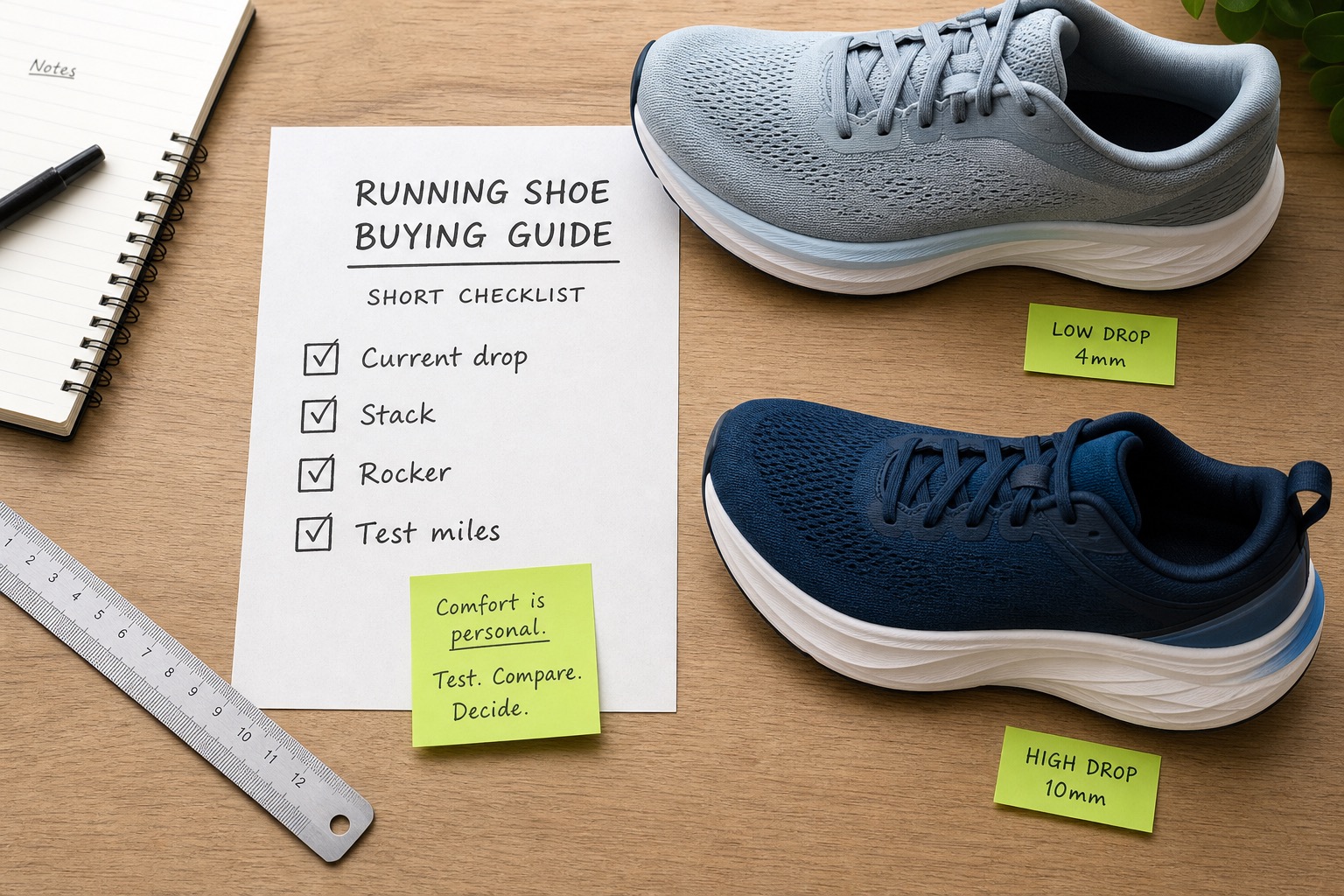
- 1
Start with your proven history
Note the drop and complete geometry of shoes that have worked comfortably for regular mileage.
- 2
Define the shoe’s job
Daily, long-run and race shoes can use different offsets; choose for the session rather than one permanent rule.
- 3
Read the whole platform
Compare stack, rocker, cushion feel, stiffness and fit alongside drop.
- 4
Check the size of the change
A move of one or two millimetres is different from moving between high and zero drop.
- 5
Test at an easy effort
Use short easy runs to evaluate whether the transition feels natural before adding volume or speed.
- 6
Compare actual models
Shortlist shoes by role and fit, then use drop to explain differences—not to crown a winner.
How different is the new shoe from your usual geometry?
Similar
Prioritise fit and ride; the small drop difference may be secondary.
Moderately different
Introduce it on short easy runs before making it your main trainer.
Very different
Rotate gradually and avoid increasing mileage at the same time.
Pain or clinical concern
Pause footwear experiments and seek qualified clinical guidance.
11Running shoes across the drop range
These catalog examples illustrate geometry choices, not a best-to-worst ranking. Specifications describe the listed models and may change with future generations.
Zero-drop, connected example
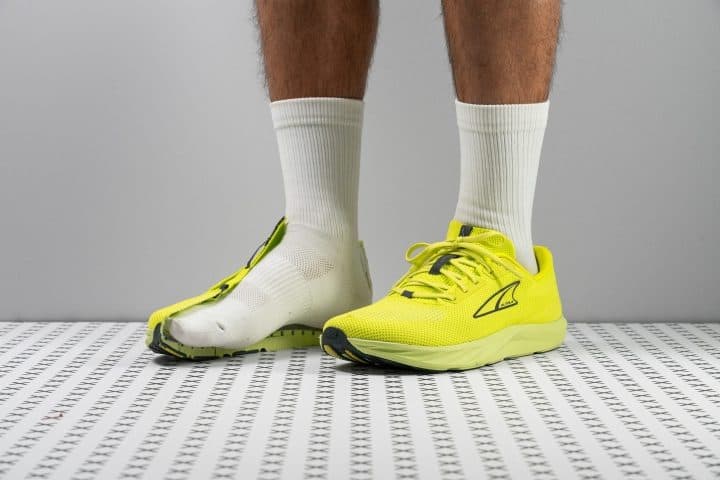
7.3 Kitletics Score
Altra Escalante 4
Why it illustrates the category: Its 0 mm offset, flexible platform and low cushion show that zero drop is a geometry choice paired here with more ground feel.
Best for
- · Runners already comfortable with zero drop
- · Flexible daily running
- · A connected ride preference
Trade-off
Less protective than high- or max-cushion trainers, and a large transition for long-time high-drop users.
Read review →From € 140Low-drop, max-cushion example
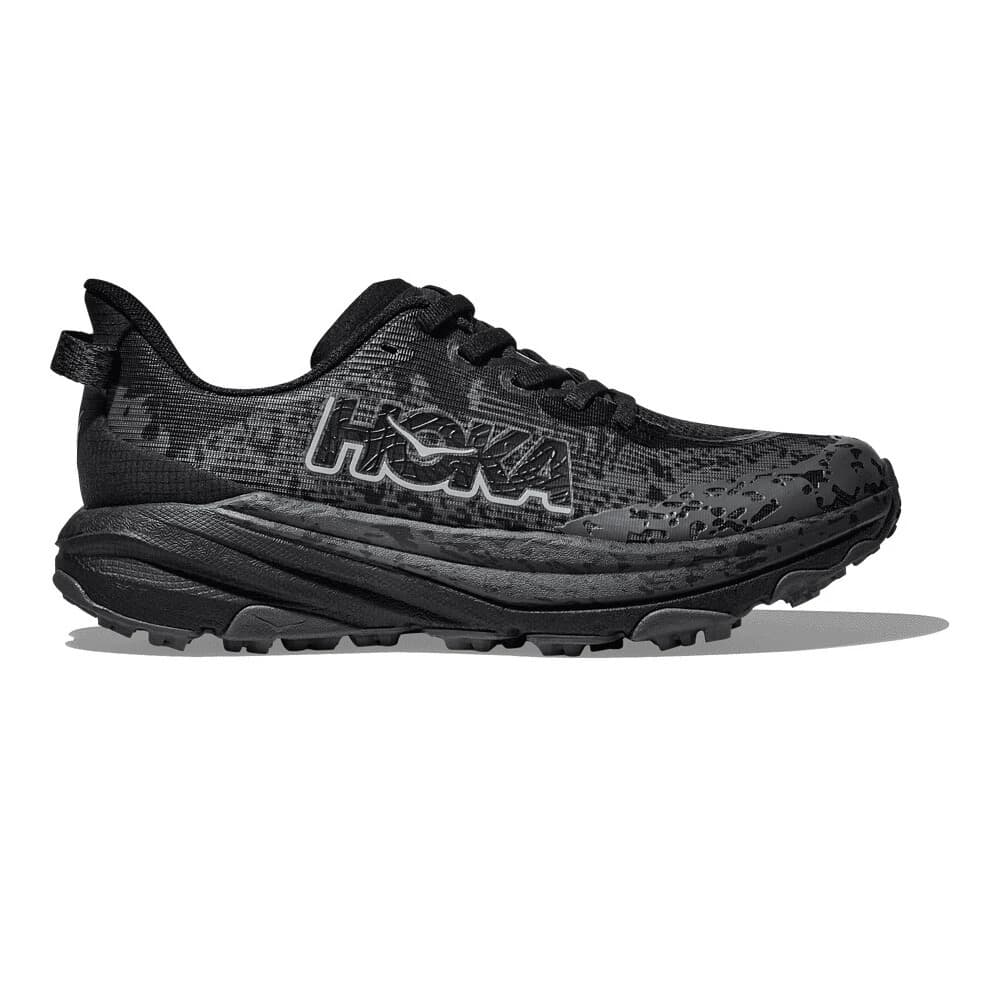
8.8 Kitletics Score
HOKA Clifton 10
Why it illustrates the category: Its 5 mm drop sits under a plush, rockered max-cushion platform—proof that low drop does not mean minimal shoe.
Best for
- · Easy and long runs
- · Rocker preference
- · Low-drop cushioning
Trade-off
The tall rolling ride offers less direct ground feel than the millimetre figure alone might imply.
Read review →From € 144Medium-drop versatile example
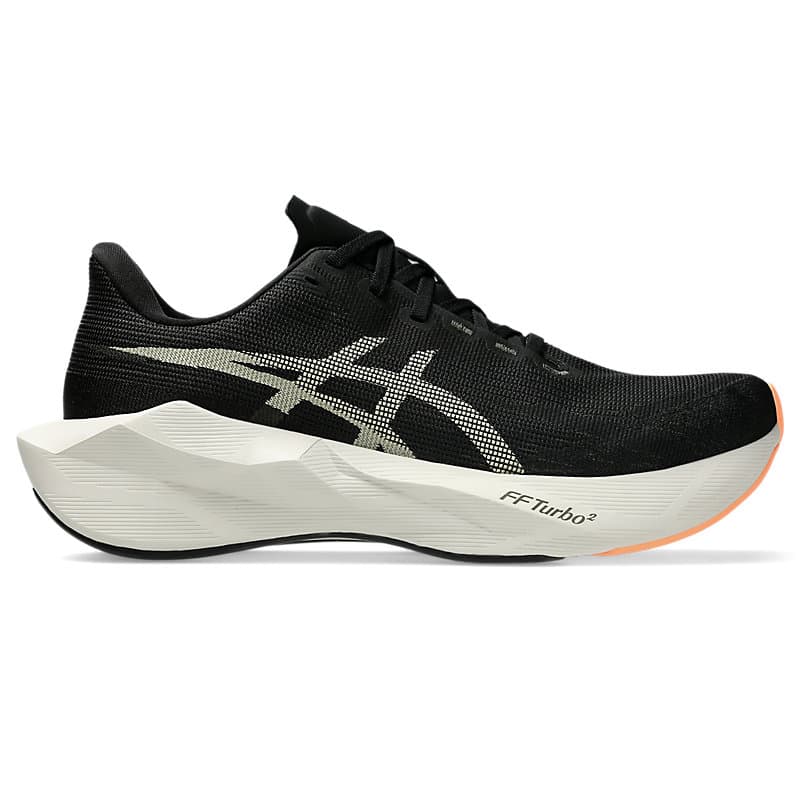
9.0 Kitletics Score
ASICS Novablast 6
Why it illustrates the category: An 8 mm offset combines with soft, high cushioning and a rockered ride for an energetic daily role.
Best for
- · Mixed daily mileage
- · Long runs
- · Soft, lively ride preference
Trade-off
Tall soft geometry matters as much as its middle-of-range drop; it is not a neutral baseline for every runner.
Read review →From € 149High-drop daily example
8.6 Kitletics Score
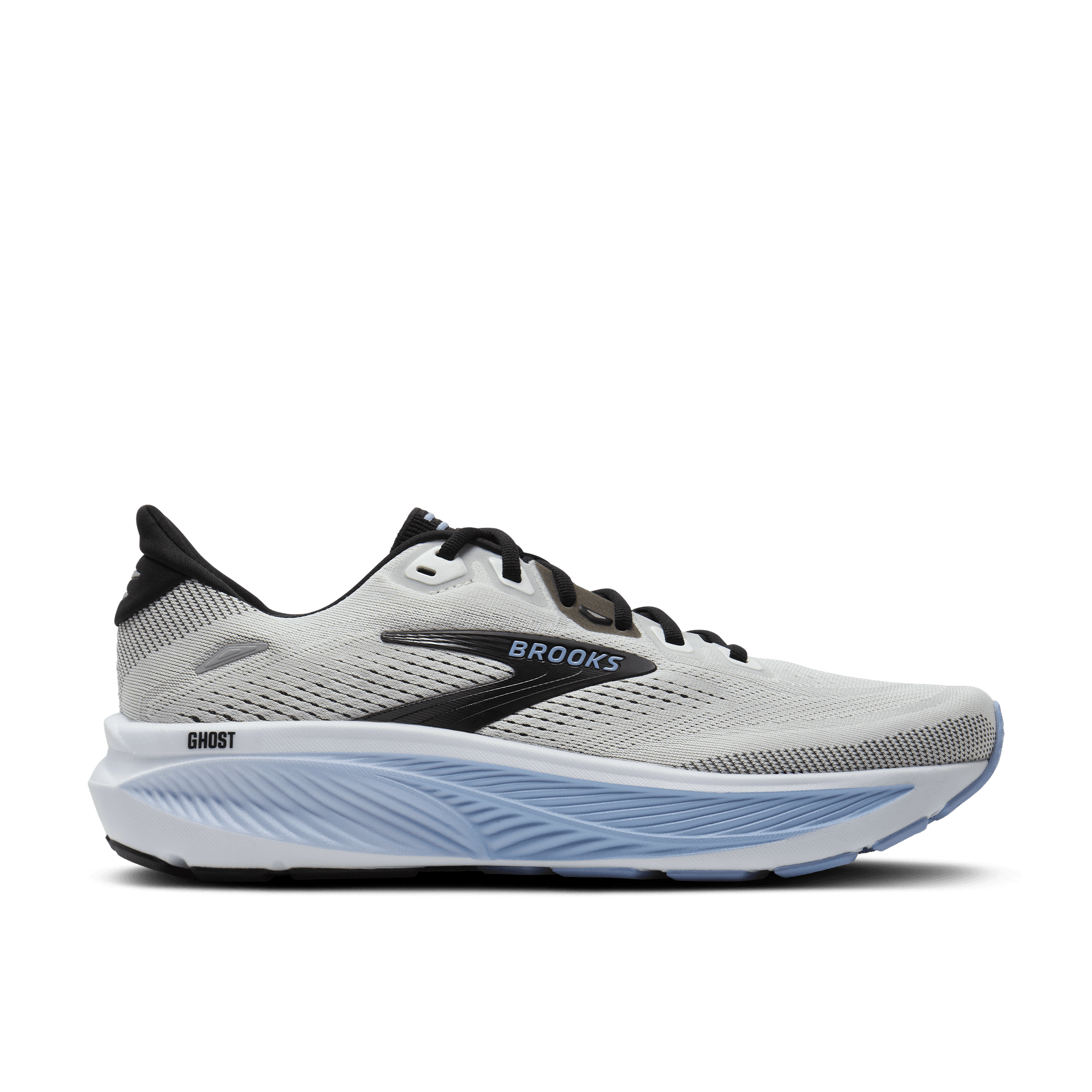
Brooks Ghost 18
Why it illustrates the category: Its 12 mm offset pairs with a smooth, soft daily platform and broad width options—a traditional high-drop trainer profile.
Best for
- · Routine daily miles
- · Runners accustomed to higher drop
- · Width-sensitive shopping
Trade-off
May feel more heel-elevated and less lively than lower-drop or speed-focused options.
Read review →From € 144
12Compare shoes from 0 mm to 12 mm
| Product | Support approach | Cushion | Drop | Widths | Best use | Key trade-off |
|---|---|---|---|---|---|---|
Altra Escalante 4 neutral | Altra EGO | low | 0 mm | standard | Zero-drop connected | Less protection for heavy / long efforts |
HOKA Clifton 10 neutral | Compression-molded EVA / CMEVA | maximum | 5 mm | standard, wide | Low-drop max cushion | Fit can run short |
ASICS Novablast 6 neutral | FF BLAST MAX + FF TURBO SQUARED trampoline pod | high | 8 mm | standard, wide | Medium-drop versatile | Not a stability shoe |
Brooks Ghost 18 neutral | DNA LOFT v3 | high | 12 mm | narrow, standard, wide, extra-wide | High-drop daily | Higher drop |
13Common drop mistakes
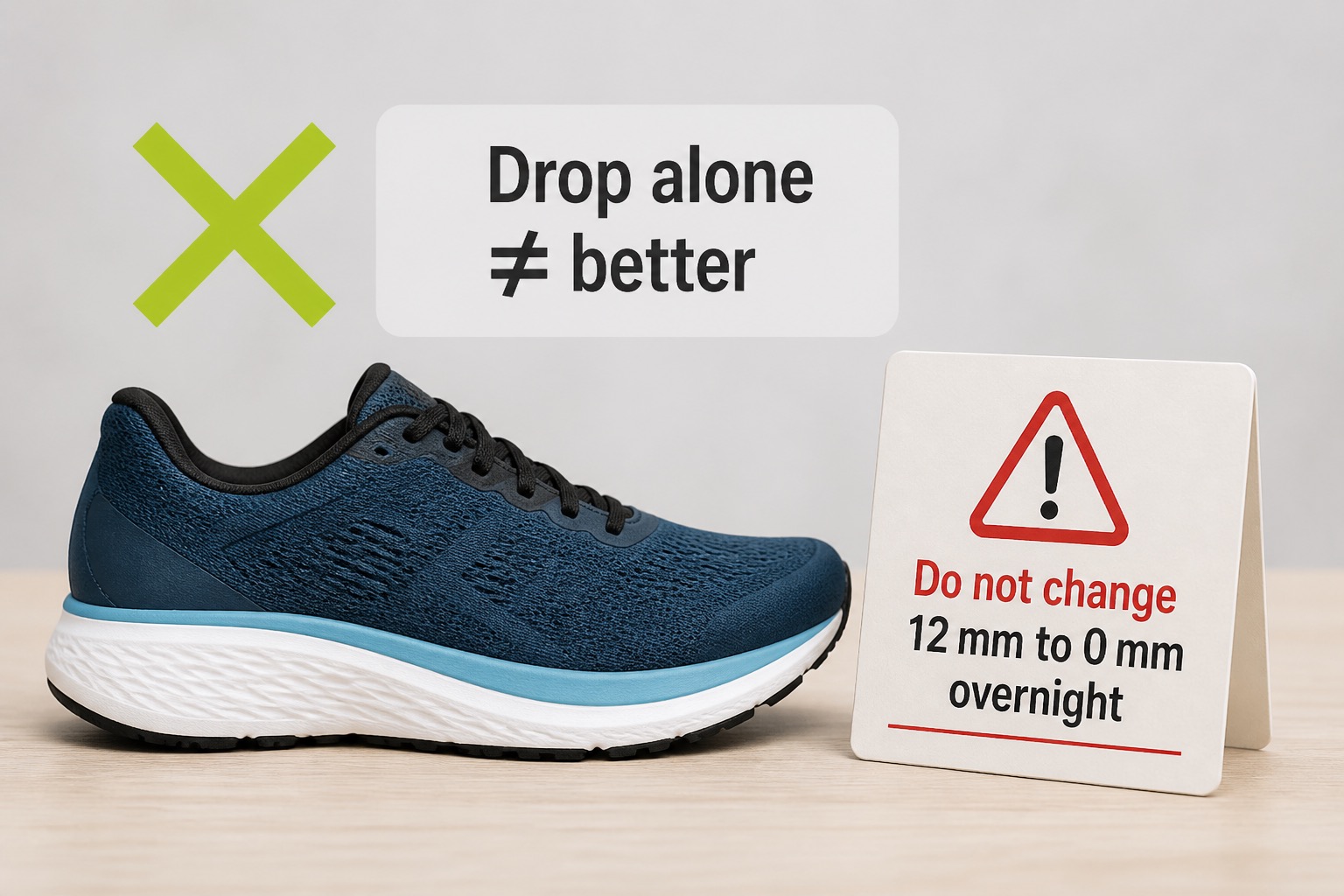
Assuming lower is better
Drop is not a progression scale. Comfort, training history and the complete platform matter more.
Equating zero drop with minimal cushioning
Zero describes equal heel and forefoot heights. A zero-drop shoe can still have substantial stack.
Using drop to force a foot strike
The number does not dictate landing pattern, and footwear is not a shortcut to a supposedly correct form.
Ignoring stack and rocker
Static offset cannot explain how a tall, rockered or stiff shoe moves underfoot.
Changing too much at once
A large drop change plus more mileage or harder sessions makes adaptation harder to assess.
Treating drop as injury treatment
Shoe geometry is not a diagnosis or medical prescription. Seek qualified help for pain or injury concerns.
14Frequently asked questions
- What is shoe drop?
- Drop is the height difference between heel and forefoot stack, measured in millimetres. It influences how the shoe encourages landing mechanics — it is not a quality ranking.
- Is a lower drop always better?
- No. Lower drop changes geometry and calf/Achilles demand for some runners; it is not a quality ranking. Preference, history and gradual transition matter more than dogma.
- How is running shoe drop measured?
- Drop is heel stack height minus forefoot stack height in millimetres. Two shoes can share a drop and feel very different because of total stack, foam and rocker.
- Should I change drop when I buy new shoes?
- Large jumps can irritate calves or Achilles for some runners. If you move between very different drops, transition gradually across easy miles rather than racing immediately.
- Does drop determine foot strike?
- Drop influences shoe geometry, but it does not force a single “correct” foot strike. Form, fatigue, speed and stack all interact. Kitletics does not prescribe form changes as medical treatment.
Examples across the drop range
Browse running shoes →Altra
Escalante 4
Zero-drop connected
7.3 SolidFrom € 140
View review →HOKA
Clifton 10
Low-drop max cushion
8.8 Very GoodFrom € 144
View review →ASICS
Novablast 6
Medium-drop versatile
9.0 ExcellentFrom € 149
View review →Brooks
Ghost 18
High-drop daily
8.6 Very GoodFrom € 144
View review →
Head-to-head comparisons
Continue the decision with focused head-to-heads — who should choose which, and the trade-offs that matter.
How we research
This guide combines catalog heel/forefoot stack, drop, cushion, flexibility and ride-character fields with manufacturer technical descriptions and independent specialist coverage. Product cards render from live catalog data; bucket labels are practical comparison ranges, not clinical thresholds.